Casino API Pricing: Setup Fees, Revenue Share and Costs to Compare
Introduction
Choosing a casino game API provider is an important decision for anyone planning to add games to an existing website or application. But before starting the integration, there is one question almost every business owner asks: How much does a Casino Games API actually cost?
The answer depends on the type of games you need, the API features, the commercial agreement and the amount of custom development required. Some providers charge a one-time setup fee, while others use monthly subscriptions, revenue-sharing models or a combination of different charges.
For example, a platform that needs only a Crash game API may have different requirements from a business looking to integrate WinGo, Mines, Roulette, Dragon Tiger and Fortune Wheel through a single API.
That is why comparing providers only on the basis of their initial price is not enough.
In this guide, we will explain the major factors affecting casino API pricing, how setup fees and revenue share work, which technical costs you should consider, and what to check before choosing a casino API provider.
Whether you are a gaming platform owner, software development company or developer building a new gaming application, this guide will help you evaluate your options more carefully.
What Is a Casino Games API?
A Casino Games API allows a website or application to communicate with a game system through a defined set of technical endpoints. It helps developers launch games, manage player sessions and exchange information about bets, wins, balances and game results.
Instead of building every game and its supporting infrastructure from scratch, a business can integrate an existing game API or use a provider's own game implementations.
Depending on the provider, a Casino Games API may include:
- Game launch and session management
- Player authentication
- Wallet balance checks
- Bet, payout and refund callbacks
- Game round history
- Admin panel and game settings
- Reports and transaction records
- Webhooks and API documentation
- Demo or sandbox access for testing
The exact features vary between providers. Some offer individual game APIs, while others provide an aggregation layer that connects an operator to multiple external studios through a single integration.
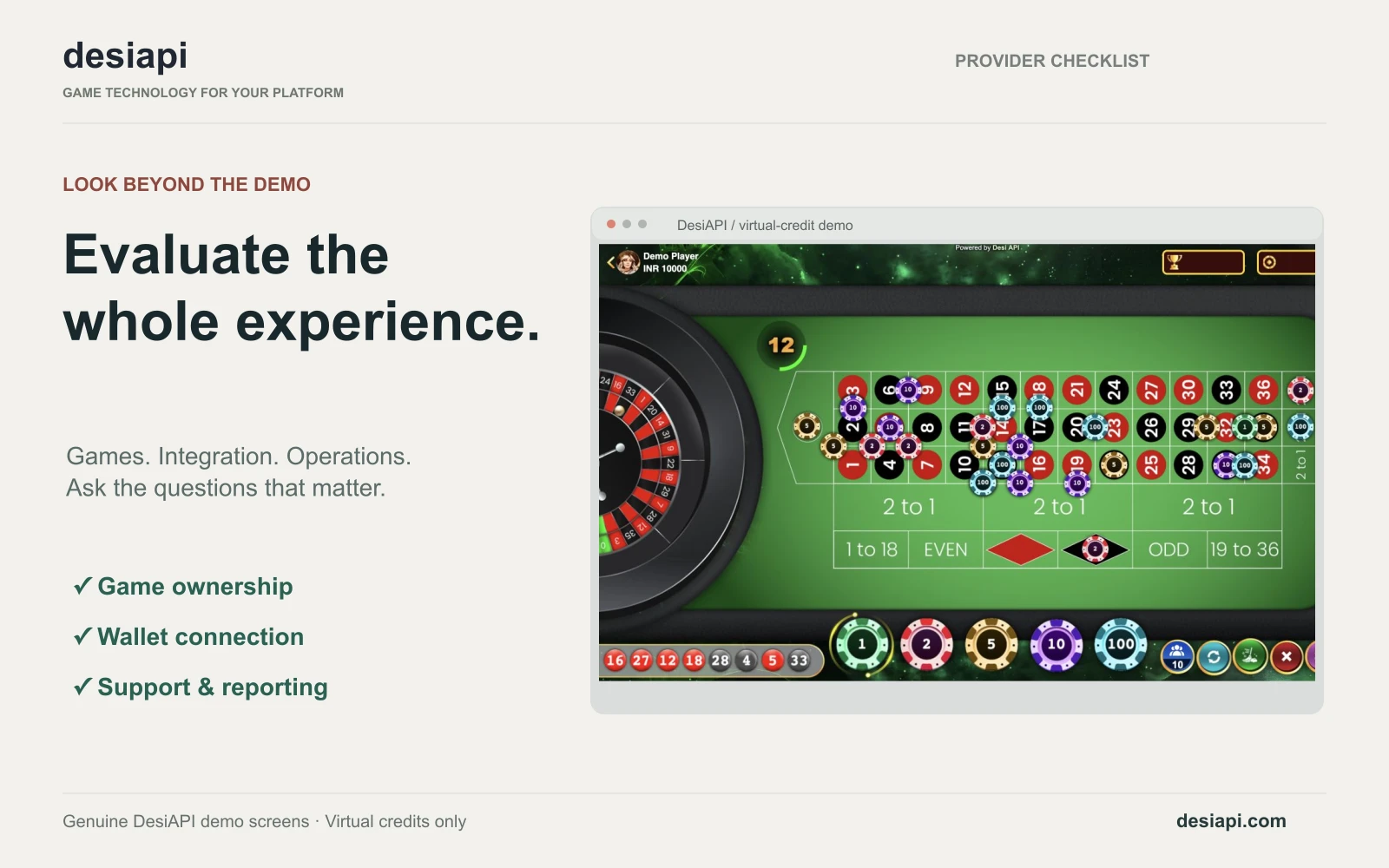
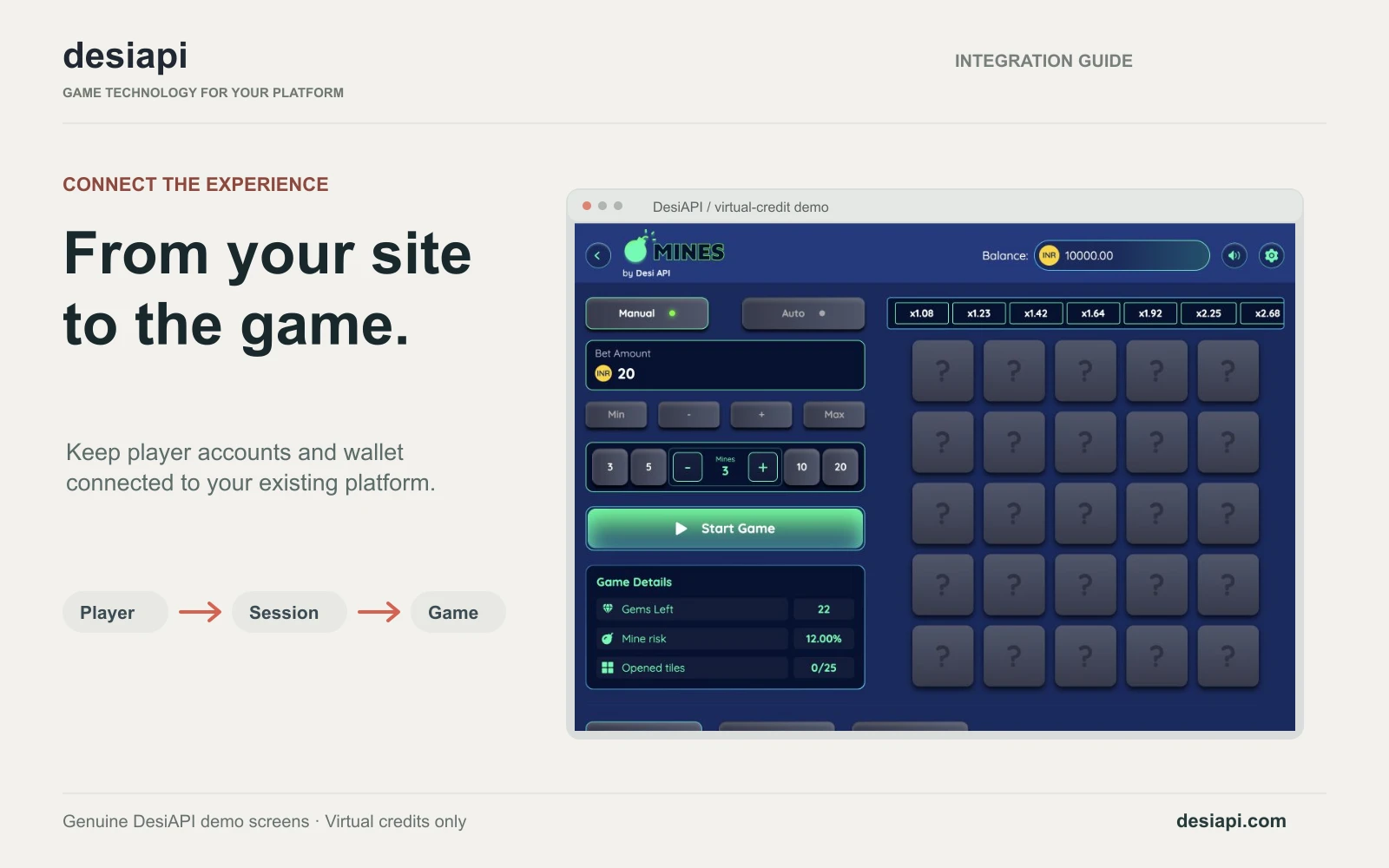
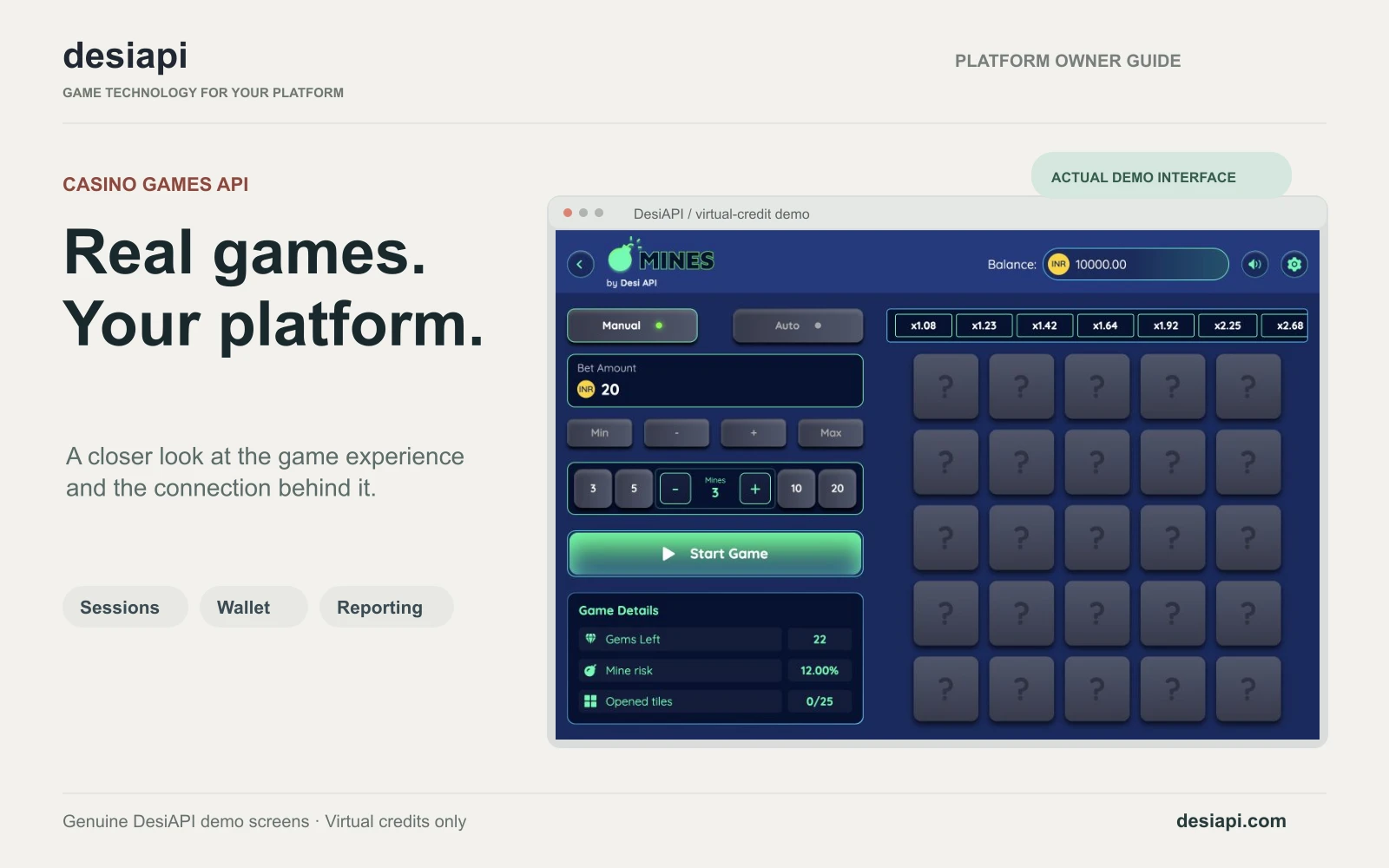
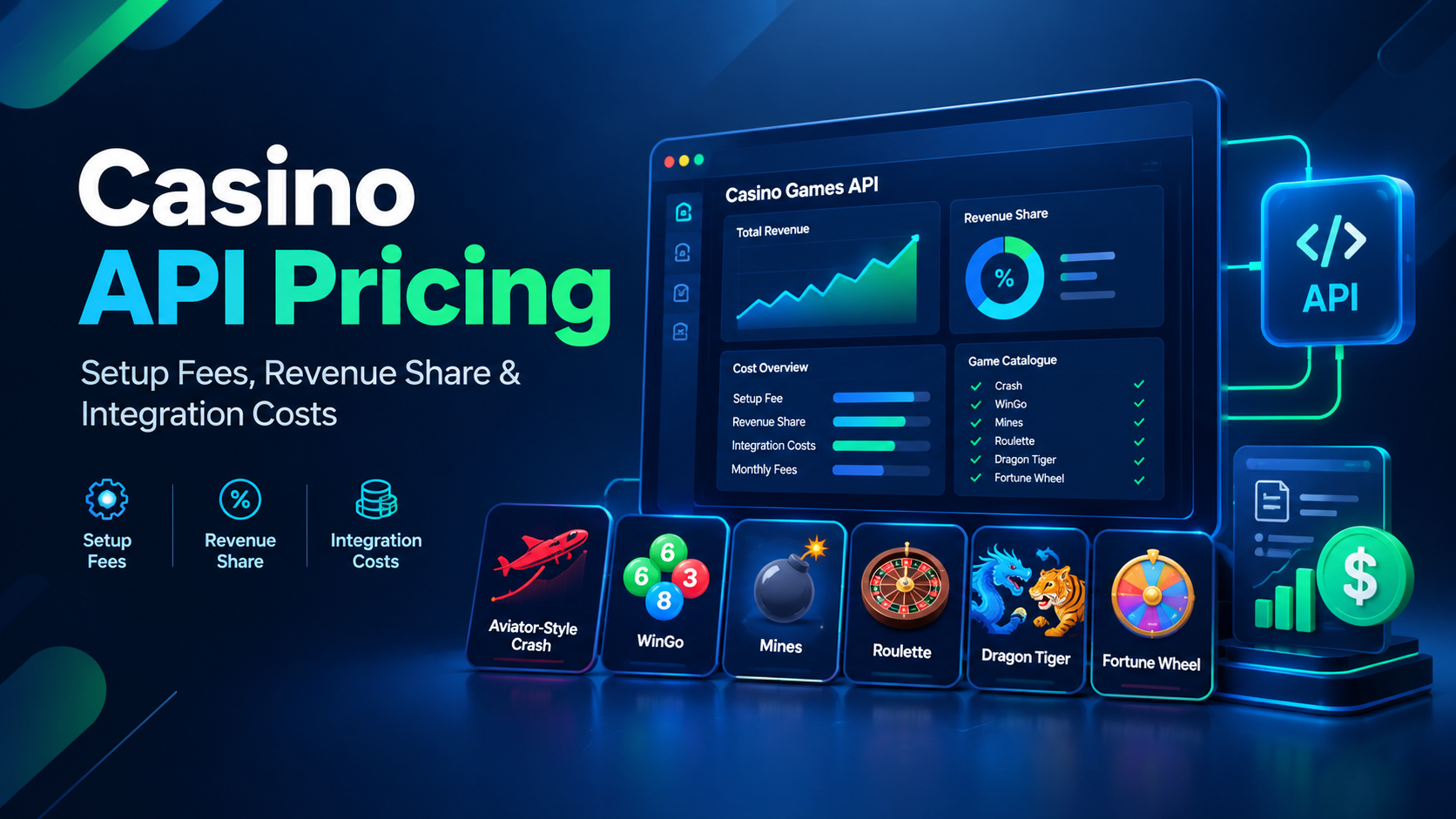
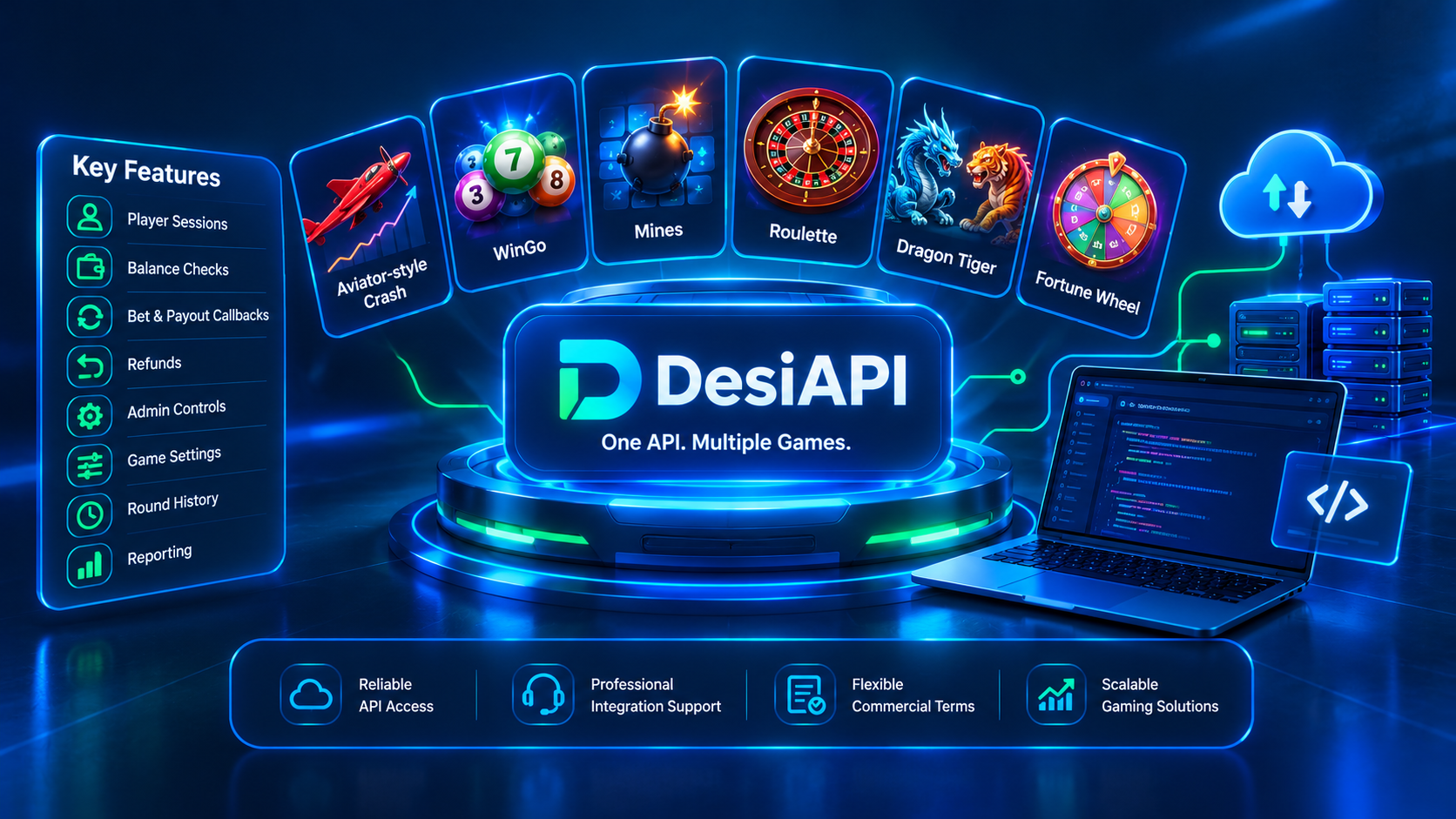
For example, DesiAPI provides its own game implementations, including Aviator-style Crash, WinGo, Mines, Roulette, Dragon Tiger and Fortune Wheel. Its integration requirements and commercial terms should be evaluated according to the specific games and functionality required.

How Much Does a Casino API Cost?
There is no single fixed price for every casino API. The total cost depends on whether you are purchasing access to individual games, integrating a multi-game API, or licensing a larger gaming platform.
The following table explains the main pricing structures you may encounter.
| Pricing Model | How It Works | What to Check |
|---|---|---|
| One-time setup fee | Pay an initial amount to activate API access or complete setup. | What is included in the fee? |
| Monthly subscription | Pay a recurring amount for access to the service. | Are there usage limits or extra charges? |
| Revenue share | Pay an agreed percentage of defined gaming revenue. | How is the revenue calculated? |
| Minimum monthly commitment | Pay a minimum amount even if revenue share is lower. | Does the minimum apply from launch? |
| Custom integration fee | Pay for additional development or specialised features. | Which deliverables are included? |
| Game licence fee | Pay for the right to use particular games under agreed terms. | Is the licence ongoing, limited or perpetual? |
Not every provider offers every model. Some combine several of these structures, so it is important to read the complete commercial proposal rather than focusing on a single number.
Are Casino API Prices Publicly Available?
Many established B2B providers do not publish a universal price list. Their quotes can depend on the operator's requirements, target markets, game portfolio and commercial agreement.
For example, SOFTSWISS presents its Game Aggregator as a single integration connecting operators to a large portfolio of games and providers, while Slotegrator describes commercial terms such as revenue share as provider-specific. These are different business models from purchasing a standalone game implementation.
You can review their published information here:
- SOFTSWISS Game Aggregator: https://www.softswiss.com/game-aggregator/
- Slotegrator FAQ: https://slotegrator.pro/faq.html
- SPRIBE official website: https://spribe.com/
The key takeaway is simple: request a written quote based on your actual requirements. An advertised starting price may not include all the costs involved in going live.
1. Casino API Setup Fees: What Are You Paying For?
A setup fee is an initial payment charged for activating an API, configuring the service or completing the technical work needed to connect it with your platform.
However, the meaning of setup fee can differ significantly from one casino API provider to another.
One provider may charge for account activation and credentials, while another may include development assistance, wallet integration, testing and deployment.
Before paying, ask for a clear breakdown of the setup package.
Common items included in setup
- API credentials and access configuration
- Integration documentation
- Game launch configuration
- Player session handling
- Wallet API or callback integration
- Sandbox testing
- Basic admin configuration
- Production deployment assistance
Some of these services may be charged separately, so do not assume they are included automatically.
For example, if you already have a gaming website with a working player wallet, your integration may mainly involve connecting game sessions and processing balance, bet, payout and refund callbacks.
On the other hand, a newly developed platform may need additional backend development, database changes and administrative tools.
Practical tip: Ask the provider to separate the API access fee from custom development charges. This makes it easier to compare offers from different vendors.
2. Revenue Share: How Does It Affect Casino API Pricing?
Revenue share is a commercial arrangement in which the provider receives an agreed percentage of a defined revenue measure.
In gaming software agreements, that measure may be Gross Gaming Revenue (GGR), although the exact definition and deductions depend on the contract.
For illustration, suppose an agreement specifies a revenue share of 10% of positive GGR.
If the monthly GGR covered by the agreement is ₹5,00,000, the calculation would be:
Provider revenue share = ₹5,00,000 × 10% = ₹50,000
This is an illustrative calculation, not a DesiAPI quotation or a universal industry rate.
The actual payable amount could differ if the contract includes adjustments, taxes, minimum commitments or other fees.
What is GGR?
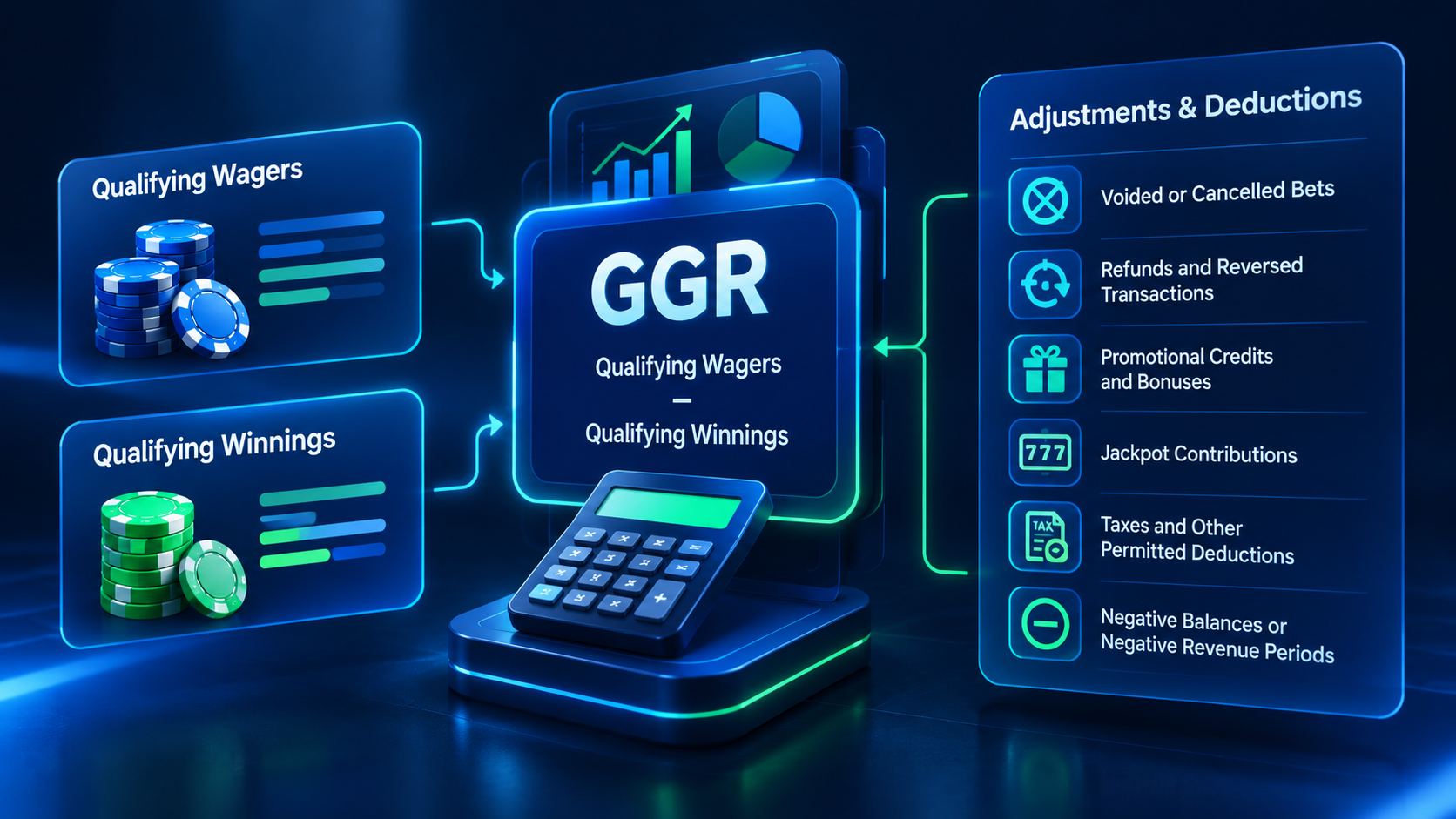
GGR generally refers to the difference between qualifying wagers and qualifying winnings over a specified period. The contractual definition matters because some agreements allow additional deductions or adjustments.
For example, you should confirm how the provider treats:
- Voided or cancelled bets
- Refunds and reversed transactions
- Promotional credits and bonuses
- Jackpot contributions
- Taxes and other permitted deductions
- Negative balances or negative revenue periods
These details can materially change the amount you pay.
Revenue share versus a fixed fee
A revenue-sharing arrangement may reduce the initial financial commitment, but the provider's fee can grow as the business grows.
A fixed-fee arrangement can make costs more predictable, but you may pay the same amount even when activity is low.
Neither option is automatically better. The right structure depends on your expected volume, cash flow, contract terms and business model.
3. Monthly Fees and Minimum Commitments
Some Casino API providers charge a recurring monthly fee in addition to a revenue share.
Others apply a minimum monthly commitment. This means the provider may receive a minimum amount even when the calculated revenue share falls below that threshold.
Consider this hypothetical agreement:
- Monthly minimum: ₹30,000
- Revenue share: 8% of qualifying GGR
- Monthly qualifying GGR: ₹2,00,000
The calculated revenue share is ₹16,000. If the contract requires the greater of the minimum or the calculated share, the provider charge would be ₹30,000 before any additional applicable charges.
Now consider qualifying GGR of ₹5,00,000. At 8%, the calculated share is ₹40,000, which exceeds the minimum.
This example demonstrates why you should understand the exact calculation method before signing an agreement.
Questions to ask your provider:
- Is the monthly fee fixed or dependent on usage?
- Does the minimum apply from the first month?
- Is the minimum charged in addition to revenue share, or does it replace a lower calculated share?
- Are demo environments and development accounts included?
- What happens if the platform is temporarily unavailable?
These questions can help you avoid unexpected costs during the early stages of a project.
4. Casino API Integration Costs: The Technical Side
The commercial API fee is only one part of the total investment. The technical cost of integrating games into an existing website or application can also be significant.
A good Casino API integration should handle more than opening a game in the browser. It must exchange data correctly between the game system and the platform's backend.
Player session management
Your platform may need to authenticate players, create game sessions and validate requests before allowing access to a game.
Poor session handling can create security issues or prevent legitimate users from launching games correctly.
Wallet integration
If your platform uses an existing player wallet, the API must support the agreed wallet model.
Depending on the implementation, the integration may need to check balances, debit bets, credit payouts and process refunds or reversals.
The platform and game system should agree on how to handle duplicate requests, timeouts and failed transactions.
Callback and webhook handling
Callbacks allow the game system to communicate with your backend when an event occurs, such as a bet, payout or refund.
A reliable integration should include appropriate authentication, request validation, idempotency controls and error handling.
Without these safeguards, a network retry could potentially cause duplicate processing or inconsistent records.
Testing and deployment
Before going live, developers should test:
- Valid and invalid player sessions
- Successful and failed balance checks
- Bet and payout processing
- Refund and rollback scenarios
- Duplicate callback requests
- Network timeouts and retry behaviour
- Game history and reporting consistency
- Administrative permissions
The exact testing scope depends on the provider's API and your platform architecture.
Maintenance and future updates
Integration work does not always end after launch. API version changes, security updates, new games and changes to reporting requirements may require additional development.
When comparing quotes, check whether ongoing maintenance is included or billed separately.
5. Does the Number of Games Affect Casino API Pricing?
Yes, it can. The commercial impact depends on how the provider licenses and delivers its games.
A business that needs only one game may have a different requirement from a platform that wants several game categories under a single API.
For example, your requirements might include:
| Game Type | API Requirement to Evaluate |
|---|---|
| Crash game API | Game launch, sessions and event handling |
| Aviator game API | Confirm the exact game, ownership and licensing rights |
| WinGo game API | Round information, results and transaction processing |
| Mines game API | Session state and game event handling |
| Roulette game API | Round lifecycle and result records |
| Dragon Tiger game API | Game state, bets and settlement callbacks |
| Fortune Wheel game API | Round events and settlement processing |
These are examples of integration considerations, not a guarantee that every provider supports the same endpoints.
A provider may offer a fixed package covering multiple games, charge separately for each game, or use a revenue-sharing arrangement across the portfolio.
When comparing offers, confirm whether the quote includes all the titles you need, whether new games cost extra, and whether there are restrictions on the number of brands, domains or applications.
Also check whether the API provides games developed by the vendor itself or connects to external game studios.
This distinction can affect licensing, support responsibilities, customisation options and the number of commercial agreements required.
6. Casino API Provider vs Game Aggregator: Which Is More Cost-Effective?
Not every casino API provider offers the same type of service.
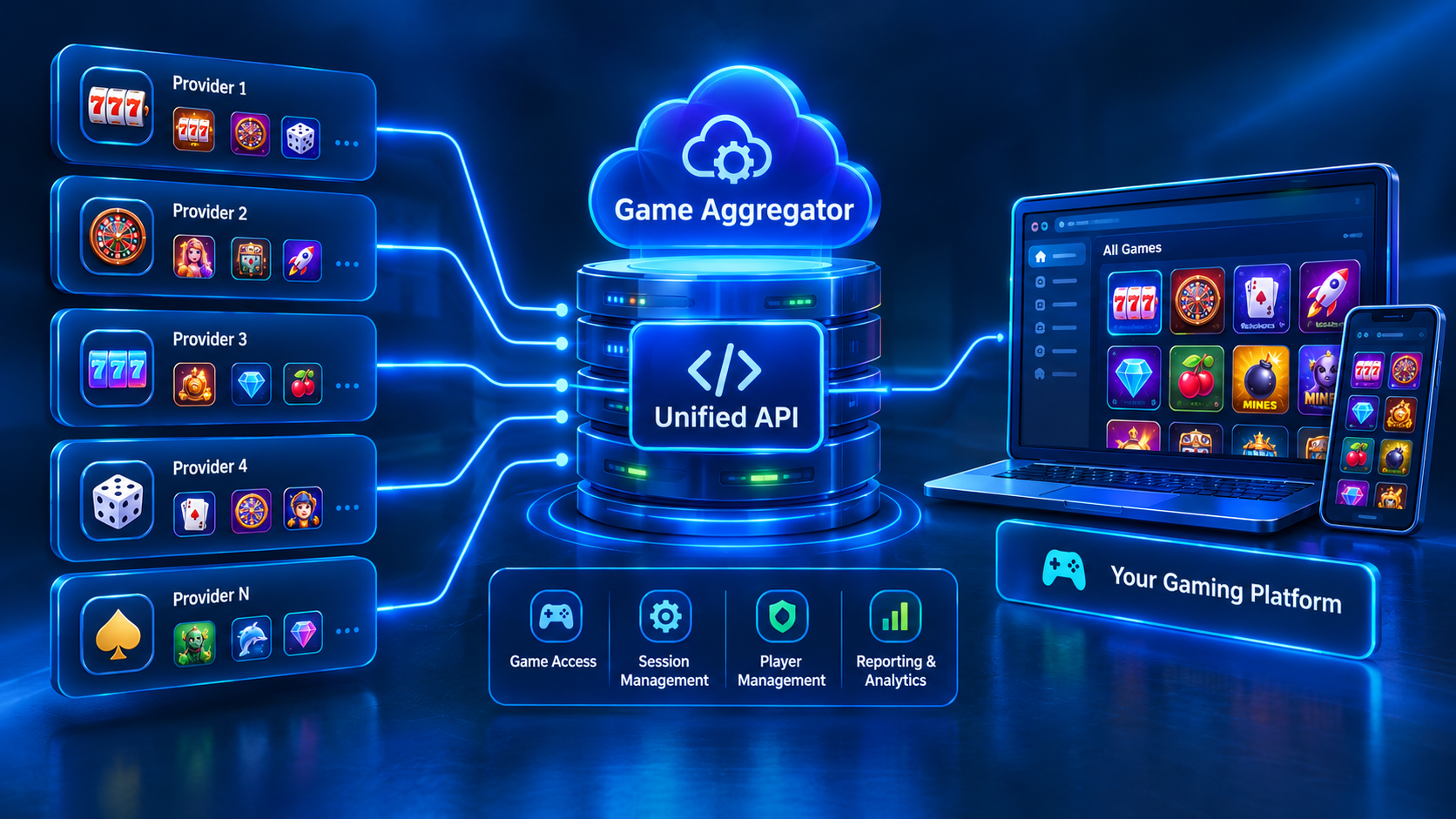
A direct game developer supplies its own games. An aggregator connects operators to games from multiple studios through a common integration layer. A broader gaming platform may also provide player management, reporting, administrative tools and other operational features.
The choice depends on what you are building.
Direct game API provider
A direct provider may be a good fit when you want a specific game portfolio, a focused integration and a direct relationship with the company responsible for the game implementation.
However, you should verify whether the provider owns or is authorised to distribute the games and whether it can support your target markets.
Casino game aggregator
An aggregator can reduce the need to integrate multiple studios independently. Instead of maintaining separate connections for every supplier, your platform may use a unified API for game access and related operations.
For example, SOFTSWISS describes its Game Aggregator as a unified integration for a portfolio of games from hundreds of providers. Slotegrator also describes a unified API approach to game content.
This can simplify technical management, but the total commercial cost depends on the agreement, included content and support model.
Own game implementation
A provider that develops its own game implementations may offer more direct control over product development and technical changes, subject to the agreed licensing and deployment terms.
DesiAPI's catalogue includes its own implementations of six game types. Businesses evaluating this option should ask about supported endpoints, wallet integration, customisation, game licensing, reporting and ongoing maintenance.
The important point is to compare the actual scope of each service, not just the number of games advertised.
7. Hidden Costs to Check Before Choosing a Casino API Provider
A low setup fee can look attractive, but it may not represent the complete cost of operating the integration.
Before finalising your agreement, review these potential expenses.
Custom development
Additional work may be needed if your platform uses a different wallet structure, requires a custom admin panel or needs features that are not available in the standard API.
Hosting and infrastructure
Depending on the architecture, your business may need to pay for servers, databases, monitoring, backups and other infrastructure.
Some providers include hosting; others expect you to manage it separately.
Support and maintenance
Check whether technical support is included in the price, whether response times are defined, and whether emergency support carries an additional fee.
Reporting and analytics
Some APIs include game history and basic reports, while advanced analytics or custom reporting may require a separate service.
Additional brands or domains
If you operate multiple applications or websites, confirm whether your agreement covers all of them.
Some contracts restrict API access by brand, domain, operator account or deployment environment.
Licensing and compliance
Depending on your business model and target jurisdiction, you may need to account for legal advice, applicable licences, technical certification and compliance work.
These costs are separate from the API price and can vary significantly by market.
Important: Do not assume that a technical API provider automatically grants every right or regulatory approval required to operate a real-money gaming business.
8. How to Compare Casino API Pricing Offers
The easiest way to compare providers is to prepare a standard checklist and ask every vendor the same questions.
Use the following table when reviewing proposals.
| Comparison Factor | What You Should Confirm |
|---|---|
| Initial setup | Exact fee and included services |
| Revenue share | Percentage and calculation basis |
| Monthly commitment | Minimum payment and billing conditions |
| Game portfolio | Available titles and licensing rights |
| API documentation | Complete endpoints and integration examples |
| Wallet support | Balance, bet, payout and refund handling |
| Security | Authentication, request signing and access controls |
| Testing | Sandbox availability and test credentials |
| Reporting | Game history, transactions and settlement records |
| Technical support | Availability, response times and escalation |
| Custom development | Hourly, fixed-price or project-based charges |
| Contract terms | Termination, renewals and data access |
Request a written proposal that separates one-time costs from recurring costs.
You should also ask whether the provider has a test environment that allows your developers to validate the integration before any production deployment.
A useful evaluation process is to test the API with realistic scenarios rather than relying only on a product demo.
For example, check what happens when a payout request is retried, a player session expires, or a wallet callback times out. These situations can reveal technical limitations that are not obvious from a pricing sheet.
9. How to Estimate Your Total Casino API Cost
You do not need a complicated financial model to begin comparing providers. Start by listing the expected one-time and recurring costs.
A basic calculation looks like this:
First-year cost = Setup fee + Integration development + 12-month recurring fees + Revenue share + Other applicable charges
This is a planning formula, not a universal billing formula. Your contract may define some charges differently.
For a more accurate estimate, calculate at least three scenarios:
- Low activity: Lower expected volume and revenue.
- Expected activity: Your most realistic business forecast.
- High activity: Higher volume, potentially resulting in greater revenue share or infrastructure needs.
Then compare the results across providers.
A provider with a higher setup fee but no monthly minimum might be more suitable for one business. Another business may prefer a recurring package that includes technical support and reporting.
The goal is to understand the total cost under different operating conditions instead of choosing the lowest advertised price.
10. Why API Documentation and Technical Support Matter
Pricing should not be the only factor in your decision.
Even a competitively priced Casino Games API can become expensive if the documentation is incomplete or your developers spend weeks resolving integration issues.
Before committing to a provider, review the following:
Clear API documentation: Endpoints, request parameters, responses, authentication and error codes should be explained properly.
Wallet callback examples: Your developers should understand how balances, bets, payouts and refunds are processed.
Sandbox access: A test environment makes it easier to validate the integration before deployment.
Transaction traceability: The system should provide enough information to investigate discrepancies and failed requests.
Versioning and updates: Ask how API changes are communicated and whether older versions remain supported.
Support process: Confirm who handles technical issues and how urgent incidents are escalated.
These factors influence the time and effort needed to integrate the API, maintain it and troubleshoot problems after launch.
For gaming platform owners and software development companies, the quality of the integration experience can be just as important as the initial commercial offer.
11. Questions to Ask Before Purchasing a Casino Games API
Before signing an agreement, ask your shortlisted providers these questions:
- What is the total initial setup fee?
- Is there a monthly subscription or minimum commitment?
- How is revenue share calculated?
- Are all required games included in the quoted package?
- Does the provider supply its own game implementations or aggregate third-party games?
- Is wallet integration included in the setup?
- Are bet, payout, refund and rollback callbacks documented?
- Can we test all required functions in a sandbox?
- Are API updates and technical support included?
- Are there extra charges for additional brands, domains or applications?
- What licensing and usage rights are included in the agreement?
- What happens to our integration and transaction records if the contract ends?
The answers should be specific enough to include in your commercial and technical evaluation.
If a vendor cannot clearly explain its pricing model, request clarification before making a payment.
12. Choosing the Right Casino API Provider for Your Business
The right provider depends on your requirements rather than a universal ranking.
If you need a particular game, a direct game provider may be sufficient. If you want games from many studios, an aggregator may reduce the complexity of maintaining multiple integrations. If you are developing a platform around your own game implementations, you may want a provider with a focused portfolio and clear technical documentation.
For a business comparing providers, consider the following priorities:
- Gaming platform owners: Focus on integration reliability, transaction consistency and ongoing operational costs.
- Software development companies: Prioritise documentation, sandbox testing and clear callback behaviour.
- Operators: Review licensing, commercial terms, reporting and support arrangements.
- Developers: Check API examples, authentication, error handling and version compatibility.
Explore DesiAPI
DesiAPI provides its own game implementations for businesses looking to integrate gaming experiences into existing websites and applications.
Its current catalogue includes:
- Aviator-style Crash
- WinGo
- Mines
- Roulette
- Dragon Tiger
- Fortune Wheel
The integration requirements can include player sessions, balance checks, bet and payout callbacks, refunds, administrator controls, game settings, round history and reporting, depending on the agreed implementation.
If you are evaluating a Casino API provider, review the technical requirements of your platform and request details about available APIs, integration support and commercial terms before making a decision.
Visit https://desiapi.com/ to explore DesiAPI and discuss your requirements.
Pricing, game availability, licensing rights and integration scope should be confirmed directly with the provider before entering into an agreement.
Conclusion
Casino API pricing involves more than the initial setup fee. Revenue share, monthly minimums, development work, hosting, technical support and licensing requirements can all affect the total cost of a project.
Before selecting a provider, compare the complete commercial proposal and make sure you understand how the API will connect with your existing player sessions, wallet and reporting system.
A provider with a clear pricing structure, suitable game portfolio and reliable technical documentation can make integration easier to plan and maintain.
Whether you need a Crash game API, WinGo game API, Mines game API, Roulette game API, Dragon Tiger game API or Fortune Wheel game API, take the time to confirm the available features and contractual terms.
The best Casino Games API is not necessarily the cheapest one. It is the solution that fits your technical requirements, commercial budget and intended operating model.
For businesses exploring their options, DesiAPI offers its own game implementations and a focused API integration approach. Review the available functionality and request a proposal based on your actual requirements.
Frequently Asked Questions (FAQs)
1. How much does a Casino Games API cost?
There is no universal price. Depending on the provider, an API may involve a setup fee, recurring subscription, revenue share, minimum monthly commitment or custom development costs. Request a quote based on your required games and integration scope.
2. What is a casino API setup fee?
A setup fee is an initial charge for activating API access or completing agreed configuration and integration work. Always confirm whether documentation, sandbox access, wallet integration, testing and deployment support are included.
3. What is revenue share in casino API pricing?
Revenue share is a contractual arrangement in which a provider receives an agreed percentage of a defined revenue measure, often GGR. The percentage, deductions and billing rules depend on the agreement.
4. Is a casino game aggregator cheaper than a direct API provider?
Not always. An aggregator may reduce the work involved in integrating multiple game studios, but the commercial agreement can include revenue share, minimum commitments or other fees. Compare the total cost and included services.
5. What affects Casino API integration costs?
The main factors include your existing platform architecture, wallet implementation, session management, callback handling, custom development, testing, security and ongoing maintenance.
6. Can I integrate a Crash game API into an existing website?
Technically, this may be possible if the provider supports your platform and you meet its integration and licensing requirements. You will need to confirm game launch, player session handling, transaction callbacks and the relevant commercial rights.
7. What should I check before choosing a Casino API provider?
Review the pricing structure, game portfolio, API documentation, wallet compatibility, security, sandbox access, technical support, licensing rights and contract terms.
8. Does DesiAPI provide its own games?
Yes. DesiAPI provides its own game implementations, including Aviator-style Crash, WinGo, Mines, Roulette, Dragon Tiger and Fortune Wheel. Confirm the current availability, integration specifications and commercial terms directly with DesiAPI.
9. Are there hidden costs in casino API integration?
Potential additional costs include custom development, hosting, support, reporting, additional game licences and compliance work. Ask the provider for an itemised quote before signing an agreement.
10. Is a casino game API the same as a complete casino platform?
No. A game API provides a way to integrate and communicate with game functionality. A complete platform may also include player management, administrative tools, reporting, payments and other operational features.
Review the Casino API integration flow, explore API pricing and quote requirements, or send your project brief to DesiAPI.