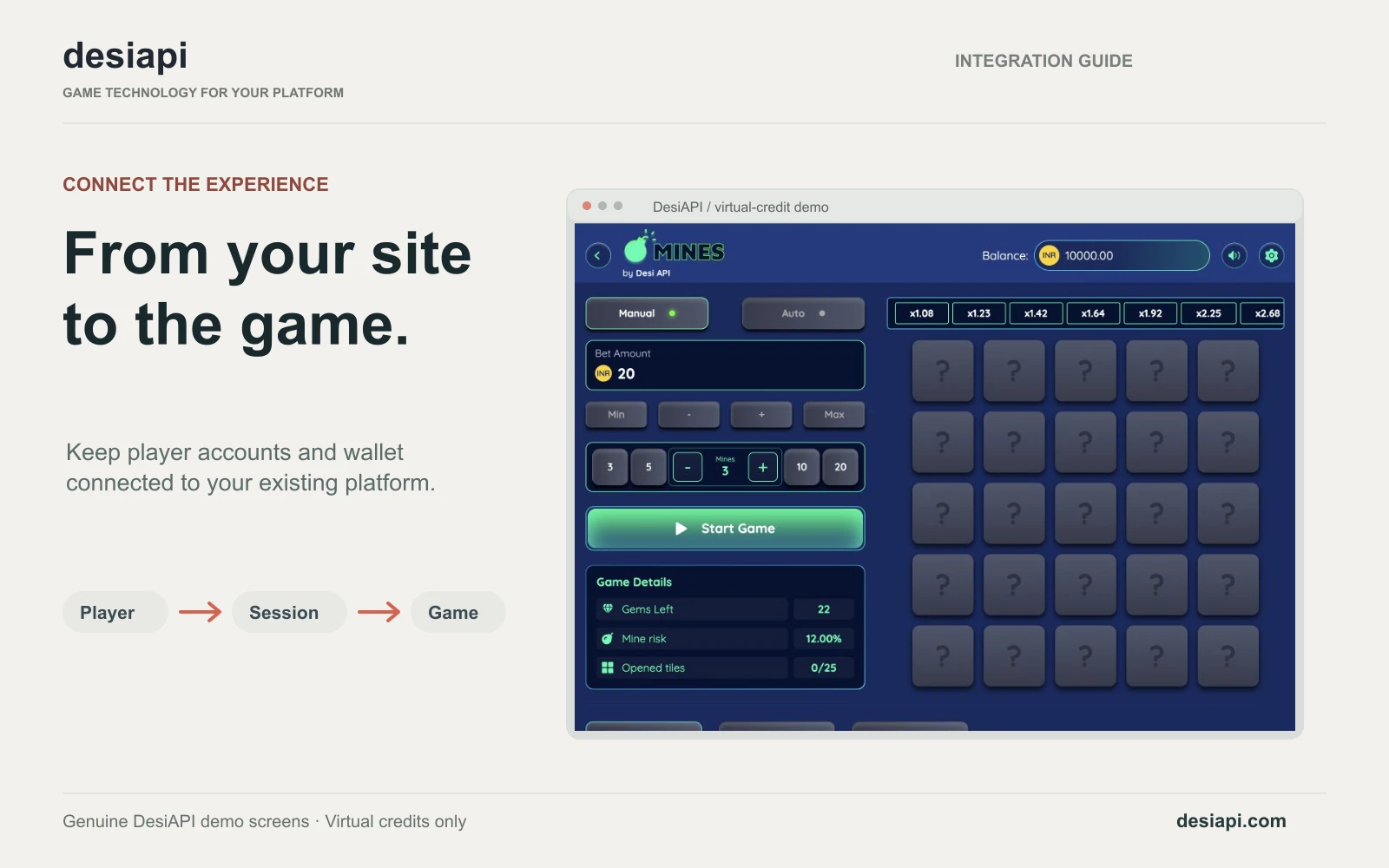
A successful Casino API integration lets players enter a game from your existing website while your backend continues to own their accounts and wallet. The visible game launch may look simple. The important work happens behind it: identifying the player, protecting credentials and recording each financial operation consistently.
This guide sets out a practical sequence for platform owners and development teams integrating DesiAPI. It explains the architecture and review decisions. It is not a substitute for the current API documentation: request the exact endpoints, payload fields, authentication rules and callback responses before writing production code.
1. Agree the integration scope before development
Start by recording what your platform already provides and what the game service will add. With DesiAPI, your website or application retains its player accounts and wallet. DesiAPI supplies its own game implementations, player-session integration, balance checks, gameplay callbacks and administrator tools.
- Select the initial games and identify their business owner.
- Describe your backend language, account model, wallet currency and amount precision.
- Identify the intended launch environment, domains and callback endpoints.
- Confirm the support contact and the evidence required to approve the integration.
DesiAPI currently offers Aviator-style Crash, WinGo, Mines, Roulette, Dragon Tiger and Fortune Wheel. Begin with a manageable integration scope, then verify each enabled game. Sharing wallet infrastructure does not mean every game has an identical round or settlement lifecycle.
For a broader explanation of supplier models and game categories, read Casino Games API: A Complete Guide for Platform Owners.
2. Prepare a separate integration environment
Use a staging version of your site and a sandbox wallet rather than real customer balances during development. Keep environment credentials separate, give the development team the access it needs and ensure test activity can be distinguished from live records.
Prepare HTTPS callback URLs that the provider can reach. Review authentication, firewall rules, request limits and logging before debugging game behaviour. Do not expose API secrets in browser JavaScript or include full session URLs in analytics events. Logs should help trace an operation without collecting access credentials.
3. Create game sessions from your backend
A player should enter the game through your authenticated platform journey. Your backend verifies the logged-in account, determines which game the player can access and requests a session using the documented provider authentication. Use a stable player identifier, not a display name as the sole identity key.
Open the returned game experience using the supported launch method. Confirm whether your implementation uses a new page, a supported embedded view or another integration flow. Do not assume an iframe is always supported: browser storage rules, security headers and mobile behaviour can affect embedded launches.
Review session expiry and invalid-session behaviour. A session issued for one player or business must not become a way to access another account. Treat the returned launch URL as sensitive and provide a clear route back to your platform if access expires.
4. Implement balance checks and gameplay updates
DesiAPI’s integration uses your Fetch Balance and Update Game Play endpoints. Obtain the current request and response contract for both. Authenticate the configured callback header before returning player data or changing a balance, then validate the player and the operation according to that contract.
| Interaction | Your platform’s responsibility | Review question |
|---|---|---|
| Balance check | Return the correct player’s available balance. | Are currency, precision and player identity consistent? |
| Bet / debit | Apply an authorised stake with an atomic wallet change. | Can concurrent requests spend the same funds? |
| Payout | Record the documented return against the original activity. | Does the amount include the stake or only profit? |
| Refund | Record a valid reversal with a link to the original operation. | Can the same stake be refunded more than once? |
A balance lookup alone cannot reserve funds. Two simultaneous bets might both see enough balance unless the debit itself checks and changes the wallet atomically. Use consistent amount handling, such as integer minor units where appropriate to your currency and agreed contract, rather than accumulating floating-point rounding differences.
Never return a success response before the wallet change and its operation record are durably committed. If your wallet cannot determine an operation’s outcome, follow the documented error and recovery behaviour instead of inventing a successful balance response.
5. Make duplicate delivery safe
A timeout is ambiguous. Your server may commit a debit successfully but lose the response before the game service receives it. If the same operation is delivered again, applying a second debit would charge the player twice. Idempotency means recognising that repeat request and returning the recorded outcome without another balance change.
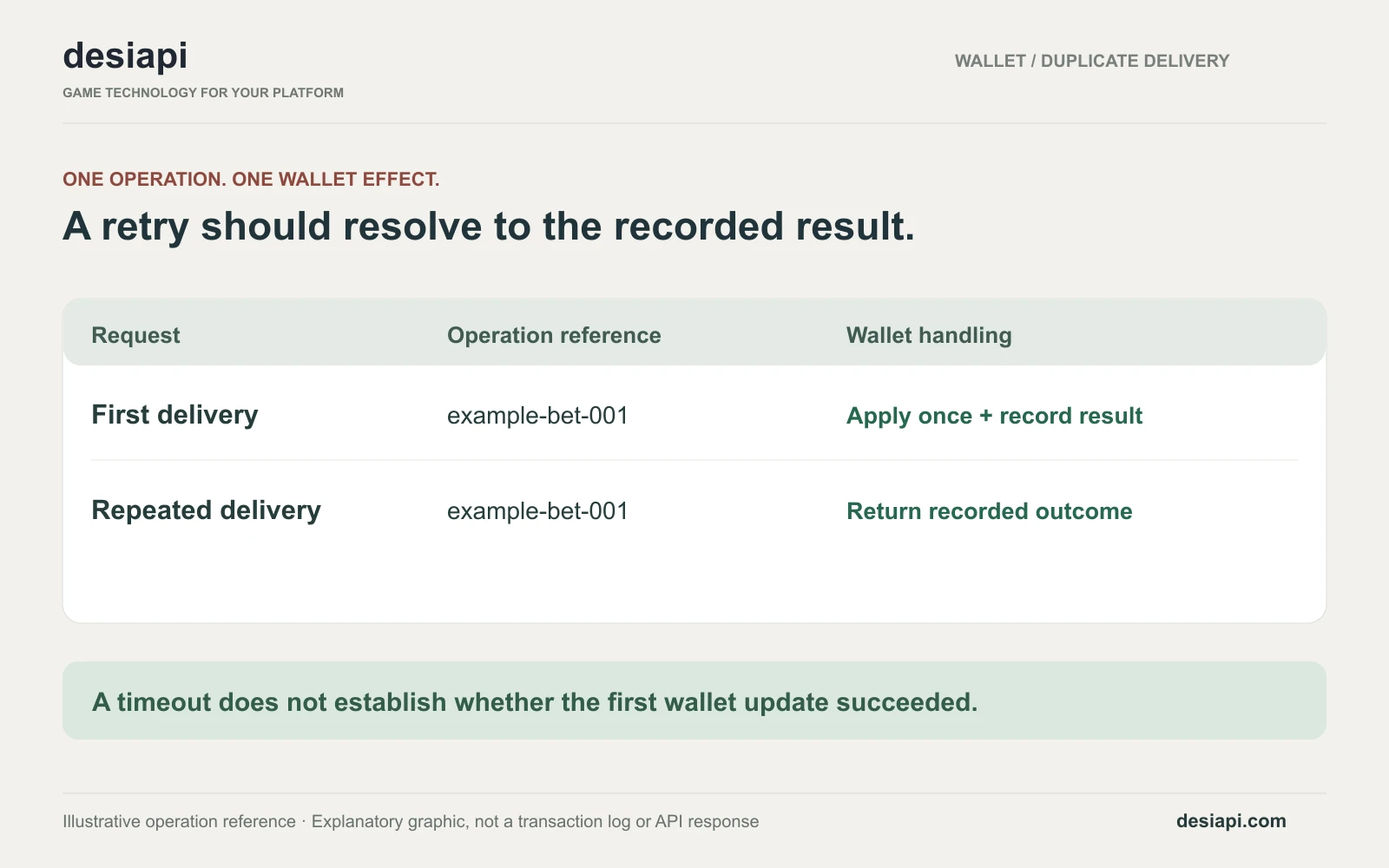
Use the documented operation identity with the correct tenant and player scope. Store that identity and the wallet result in the same atomic boundary as the balance change. Enforce uniqueness at the storage level where your wallet design requires it; checking a record and writing it later can leave a concurrency gap.
Also detect conflicting reuse of an identifier. A second request with the same identity but a different player, amount or operation type should not silently inherit a previous success. Follow the provider’s agreed error contract and make the mismatch visible for investigation.
6. Define recovery and reconciliation
Record enough information to connect a player, game, round, bet and wallet operation. Keep a clear distinction between a rejected request, a confirmed operation and an operation whose response is unknown. That distinction is essential when support teams investigate a missing payout or a disputed stake.
Agree how retries, refunds and pending operations are resolved with DesiAPI before launch. Do not add an automatic refund just because a browser disconnected or a request timed out: the original operation may already have succeeded. Resolve it using the documented status and reconciliation process.
A reconnect should restore an accurate view of the session and round. It should not submit a fresh bet or cash-out solely because the interface lost contact. This is especially important for a Crash game API, where a delayed user action may no longer be valid when the connection returns.
7. Review the experience for every selected game
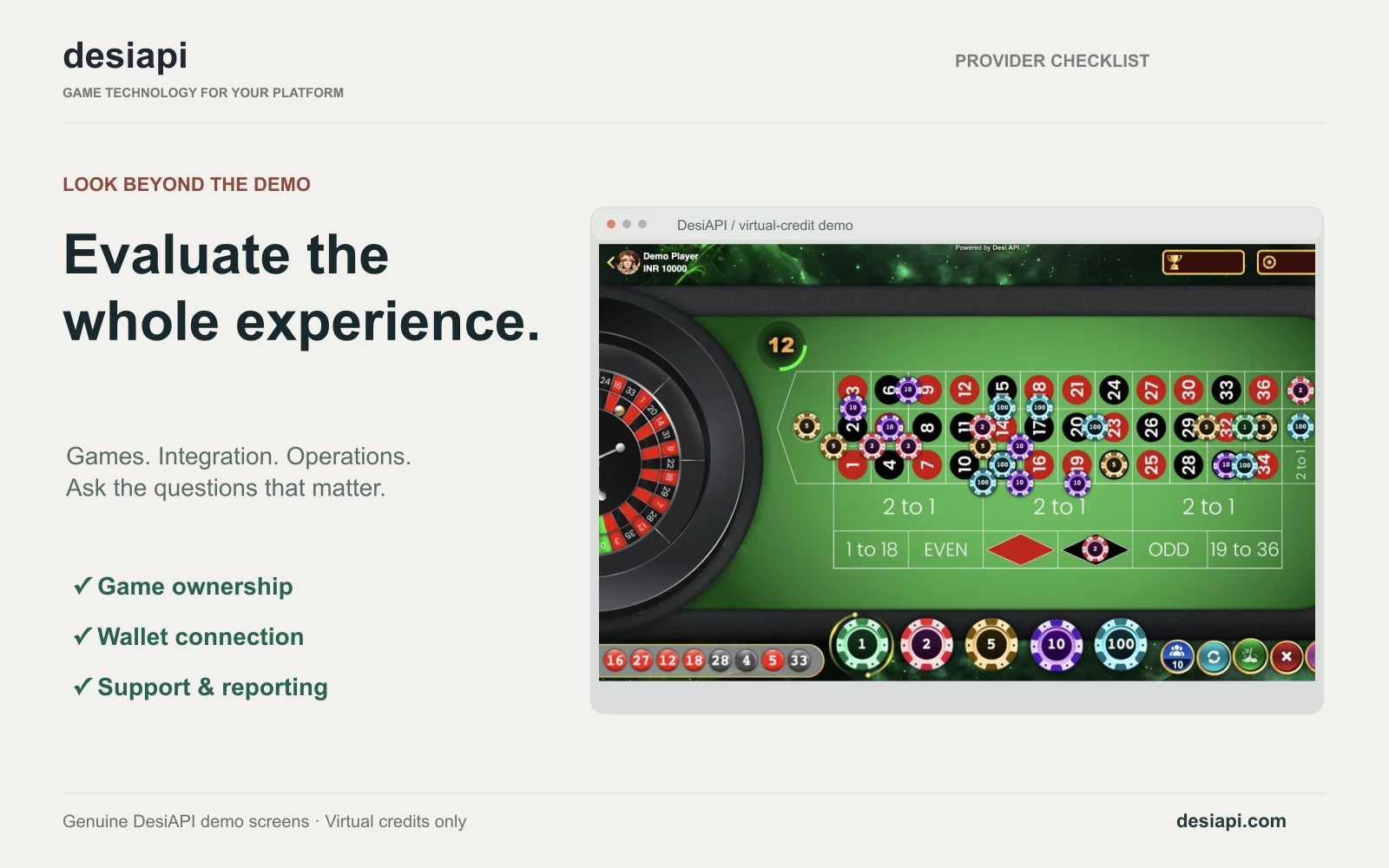
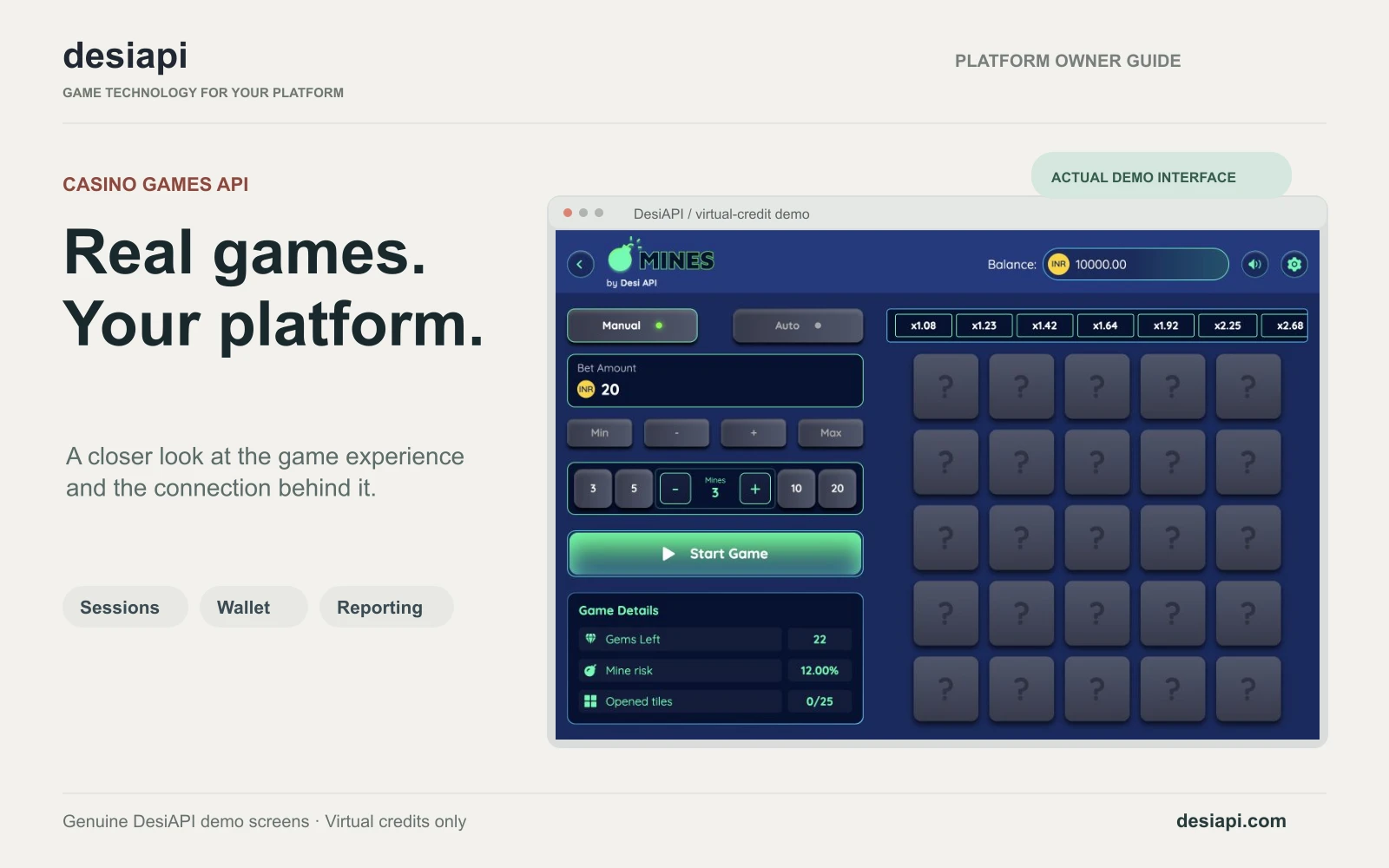
For a WinGo game API, check that the interface respects the betting deadline and shows the correct completed round. With a Mines game API, review an active game across refresh and reconnect. For a Roulette game API, check the betting table and the way settlement appears in history.
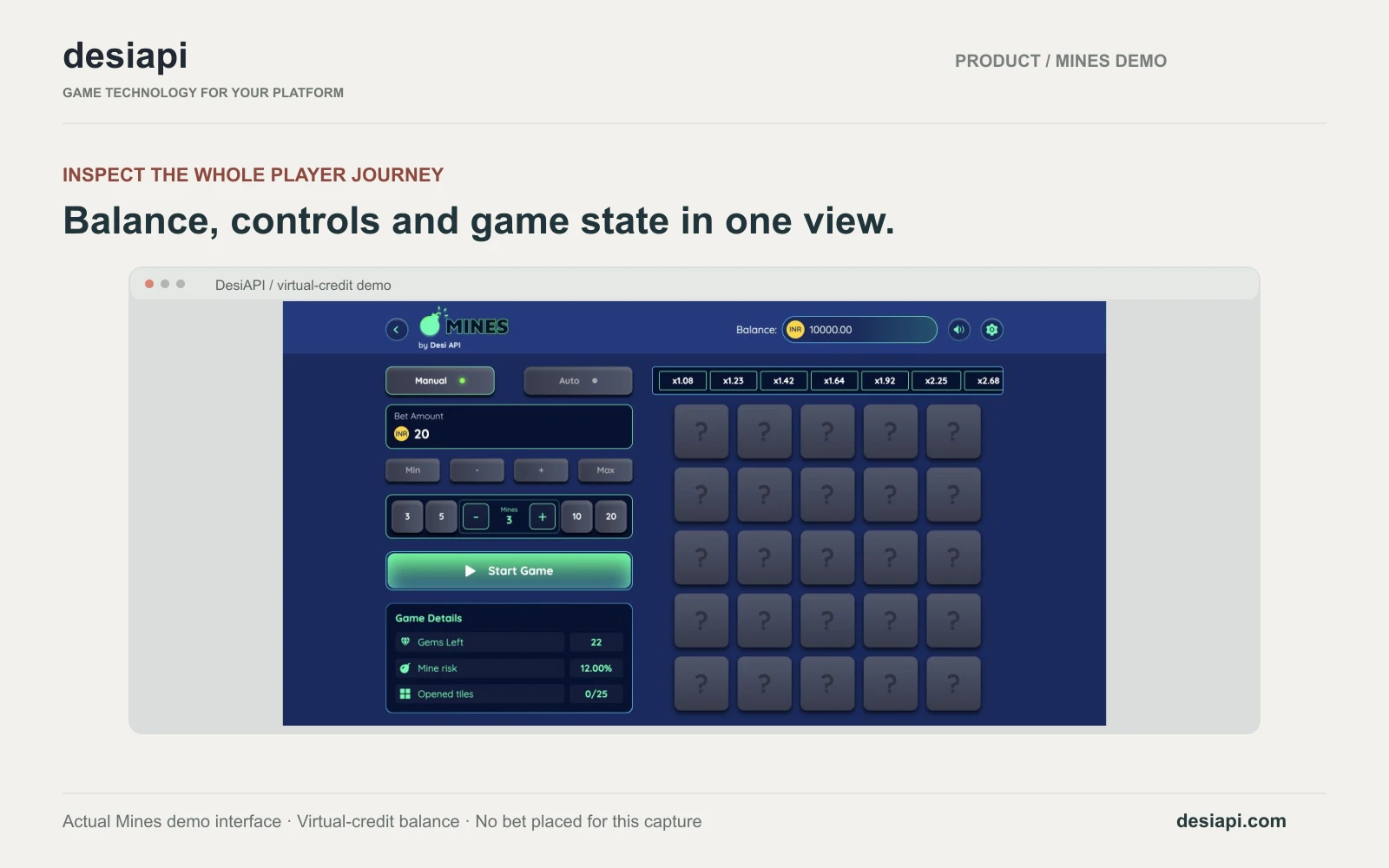
Dragon Tiger and Fortune Wheel also need their own outcome and wallet review. DesiAPI provides these game implementations; confirm the actual options and rules available in your configuration. Do not copy payout assumptions from another supplier’s game.
If your requirement is an Aviator game API, clarify product identity at the start. DesiAPI’s crash experience is its own implementation and is not SPRIBE’s Aviator. An integration agreement should identify the exact game being supplied.
8. Complete a focused pre-launch review
- Normal flow: launch a session, check balance, place a sandbox bet and verify settlement.
- Failure flow: review insufficient funds, invalid credentials and expired sessions.
- Duplicate flow: confirm repeated operations do not apply another wallet change.
- Interruption flow: review a dropped response and recovery without repeating a player action.
- Evidence: match player-facing history, administrator records and the wallet ledger.
- Devices: review the launch, controls and return journey on relevant mobile browsers.
Review expected traffic and callback response behaviour with both teams. Choose a controlled release scope and a way to restrict new activity if a problem occurs. Stopping new game launches and resolving already accepted bets are separate decisions; the release plan should account for both.
Frequently asked questions
Can this work with my current backend stack?
API-based integration can fit different backend languages, but compatibility depends on implementing the agreed authentication, HTTP requests, callbacks and wallet semantics. Share your stack with DesiAPI before estimating the work.
How long does integration take?
The answer depends on your wallet design, selected games, development resources and review requirements. A generic competitor launch claim is not a reliable estimate for your project. Ask for an estimate against your documented scope.
Can the public demo validate my wallet?
No. The public demo uses a separate virtual-credit wallet. It is useful for evaluating game presentation. Your own callback implementation must be reviewed in your integration environment.
Start with a clear wallet contract
The strongest integration plan gives equal attention to the game experience and the operation records behind it. Prepare your player identifiers, callback design, selected games and expected traffic, then contact DesiAPI to discuss integration. If you are still evaluating suppliers, use our operator’s Casino API provider checklist to compare the same requirements across proposals.
Review the Casino API integration flow, explore API pricing and quote requirements, or send your project brief to DesiAPI.