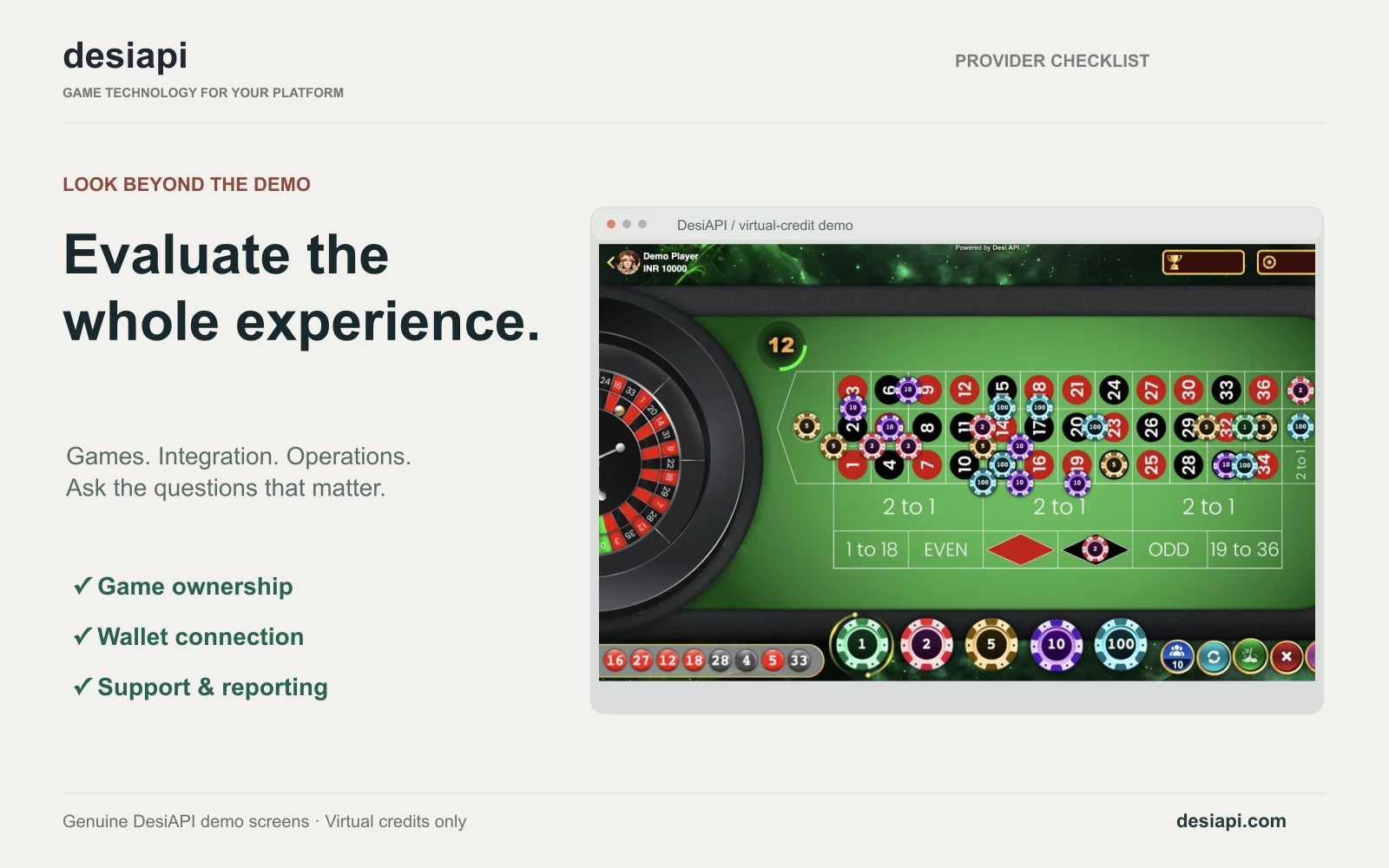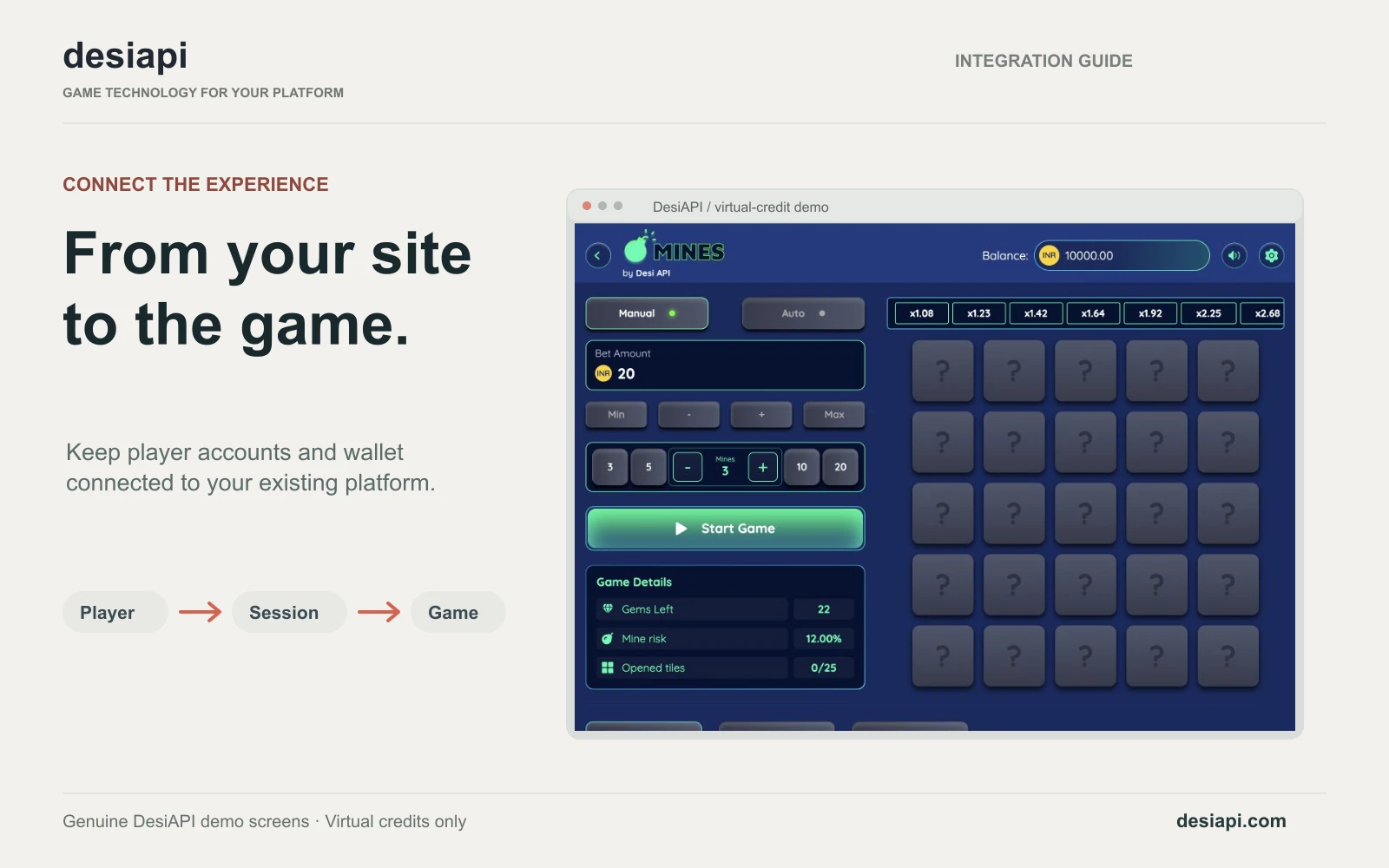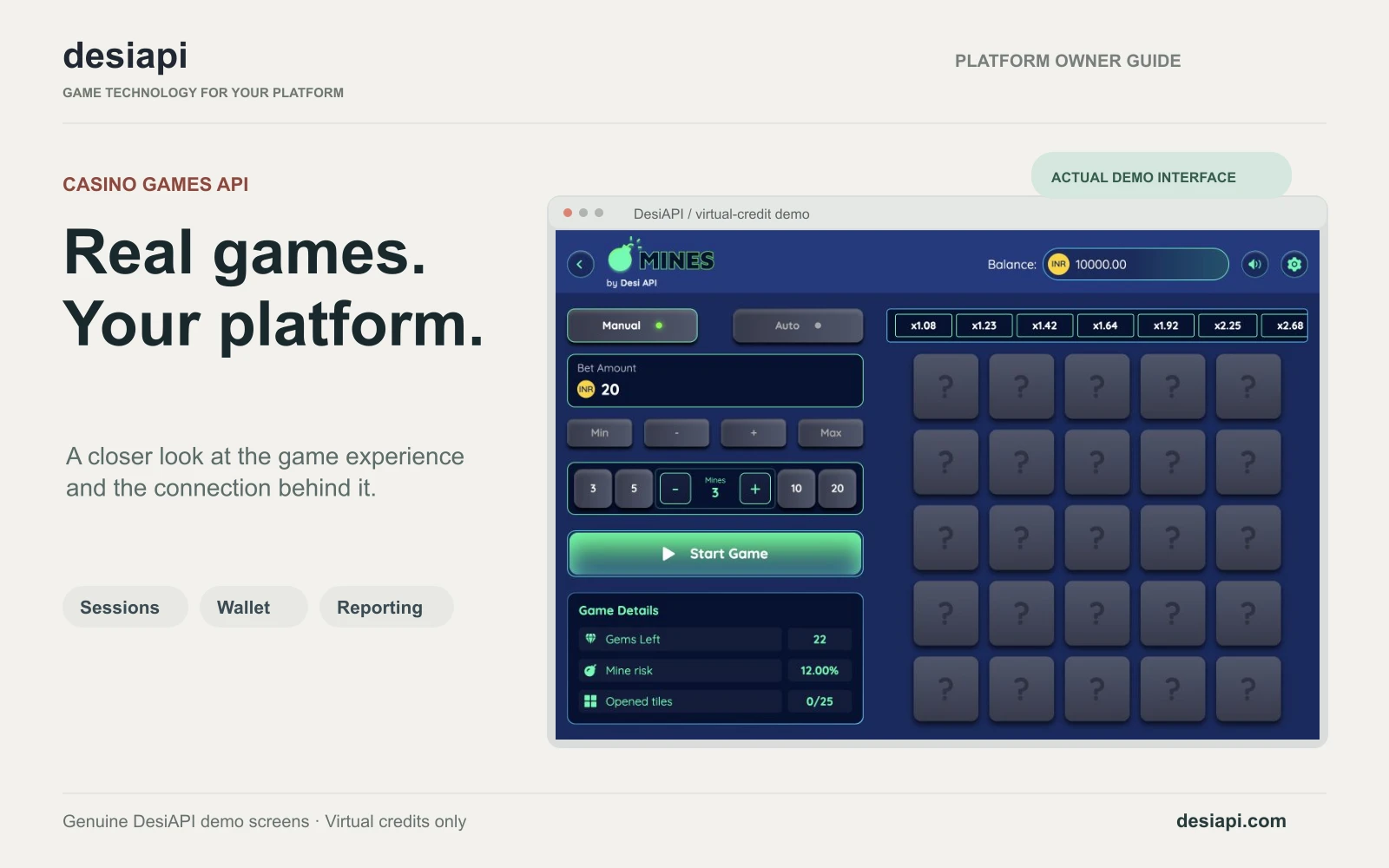
Adding games to an established platform should begin with a clear question: how will each game work with the player accounts, wallet and administration tools you already use? A Casino Games API provides that connection. It lets your business introduce game experiences while keeping the surrounding player journey within your own website or application.
This guide is for gaming platform owners, operators, software development companies and developers evaluating an integration. It explains the components, the differences between supplier models, and the questions to settle before committing development resources.
What is a Casino Games API?
A Casino Games API is a set of interfaces that connects a game service with an operator’s platform. In a typical integration, the platform identifies the player, requests a game session and implements wallet endpoints. The game service uses that connection to check balances and communicate bets, payouts and refunds.
The API is one part of the product. Players also need the game interface; operators need settings, history and reporting; developers need clear documentation and predictable responses. Evaluate the complete flow rather than a list of endpoints alone.
DesiAPI supplies its own game implementations for integration with existing websites and applications. Its catalogue currently includes Aviator-style Crash, WinGo, Mines, Roulette, Dragon Tiger and Fortune Wheel. Your existing platform remains responsible for player accounts and its wallet.
Game developer, aggregator or complete platform?
These supplier models solve different problems. A game developer creates game content. An aggregator connects operators to content from multiple suppliers through a common integration. A complete casino platform has a broader role, potentially including account management, payments and other business systems. Establish which product you need before comparing proposals.
SPRIBE describes itself as an iGaming game developer and identifies Aviator as its flagship title. SOFTSWISS, Slotegrator’s APIgrator and Hub88 describe aggregation offerings. DesiAPI’s proposition is a focused catalogue of its own six implementations. A smaller direct catalogue and a multi-studio aggregator should be compared against your actual content requirements, rather than treated as identical services.
The six game experiences in the DesiAPI catalogue
A useful catalogue offers distinct interactions. Use the following overview to decide which experiences fit your product, then review the rules and settings for each selected implementation.
| Game API | Core experience | What to review |
|---|---|---|
| Crash game API | A rising multiplier and a decision about when to collect. | Round timing, cash-out confirmation and interrupted connections. |
| WinGo game API | Colour and number prediction within timed rounds. | Betting deadlines, result presentation and round history. |
| Mines game API | Reveal grid tiles and decide whether to continue or collect. | Active-session recovery and the stake-to-payout lifecycle. |
| Roulette game API | A digital betting table and spinning wheel. | Supported bets, table usability and settlement records. |
| Dragon Tiger game API | A card comparison experience with a short reveal. | Bet options, result rules and history clarity. |
| Fortune Wheel game API | A wheel-based instant game experience. | Outcome presentation, settings and wallet updates. |
If you are searching for an Aviator game API, check the identity of the supplier carefully. DesiAPI offers its own Aviator-style crash implementation. DesiAPI is not affiliated with SPRIBE and does not supply SPRIBE’s Aviator product. A shared game category does not mean the same game, licence or distribution rights.
Explore the DesiAPI game catalogue to review individual game pages and public demos. Demos use virtual credits with no monetary value; they help you evaluate the interface, but do not replace a technical integration review.
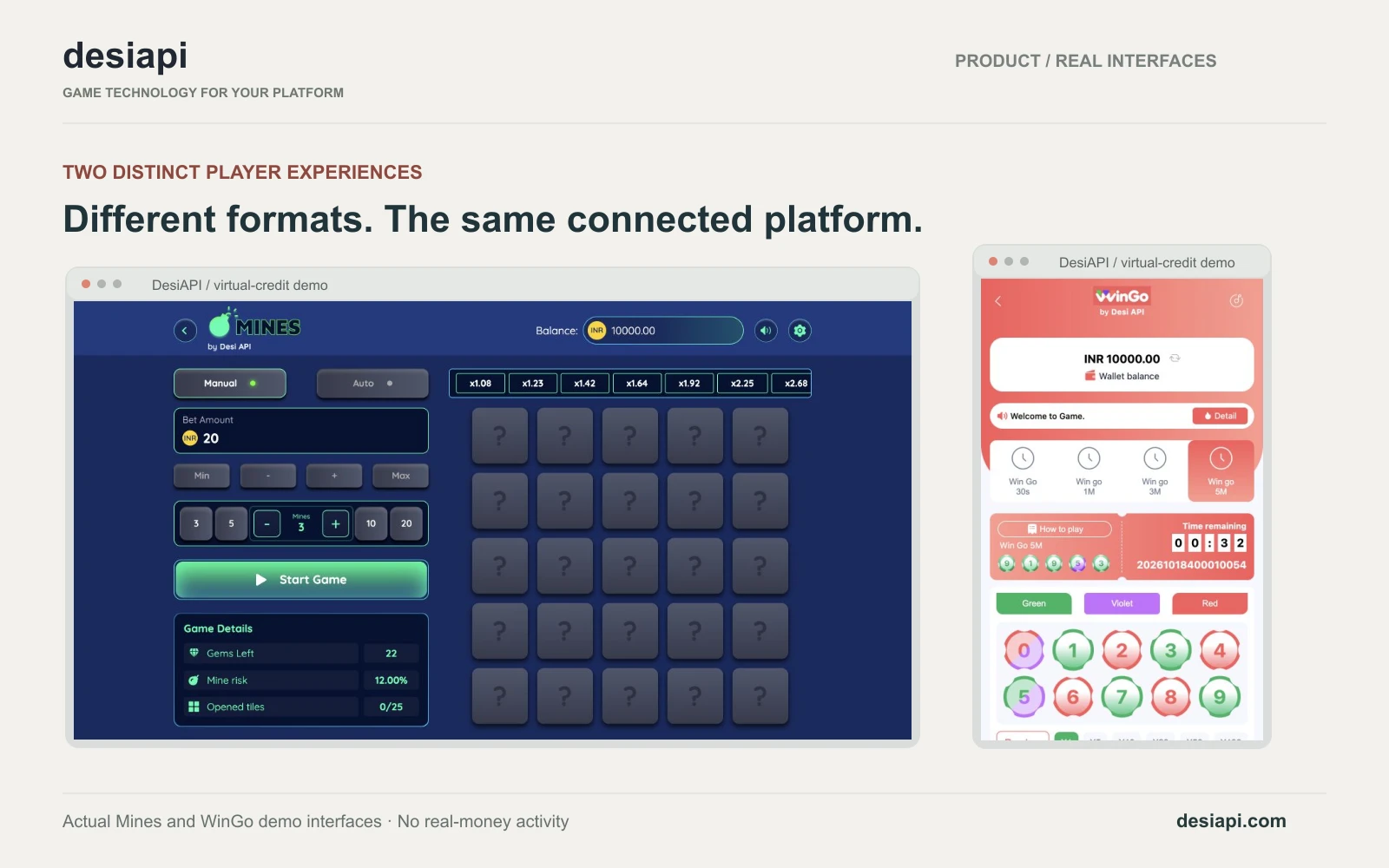
How player sessions and wallet callbacks work together
The player journey starts in your platform. After login, your backend requests a session for the correct player and selected game. The player opens the resulting game experience. The session connects activity to the correct business and player, so session credentials should be treated as sensitive access data.
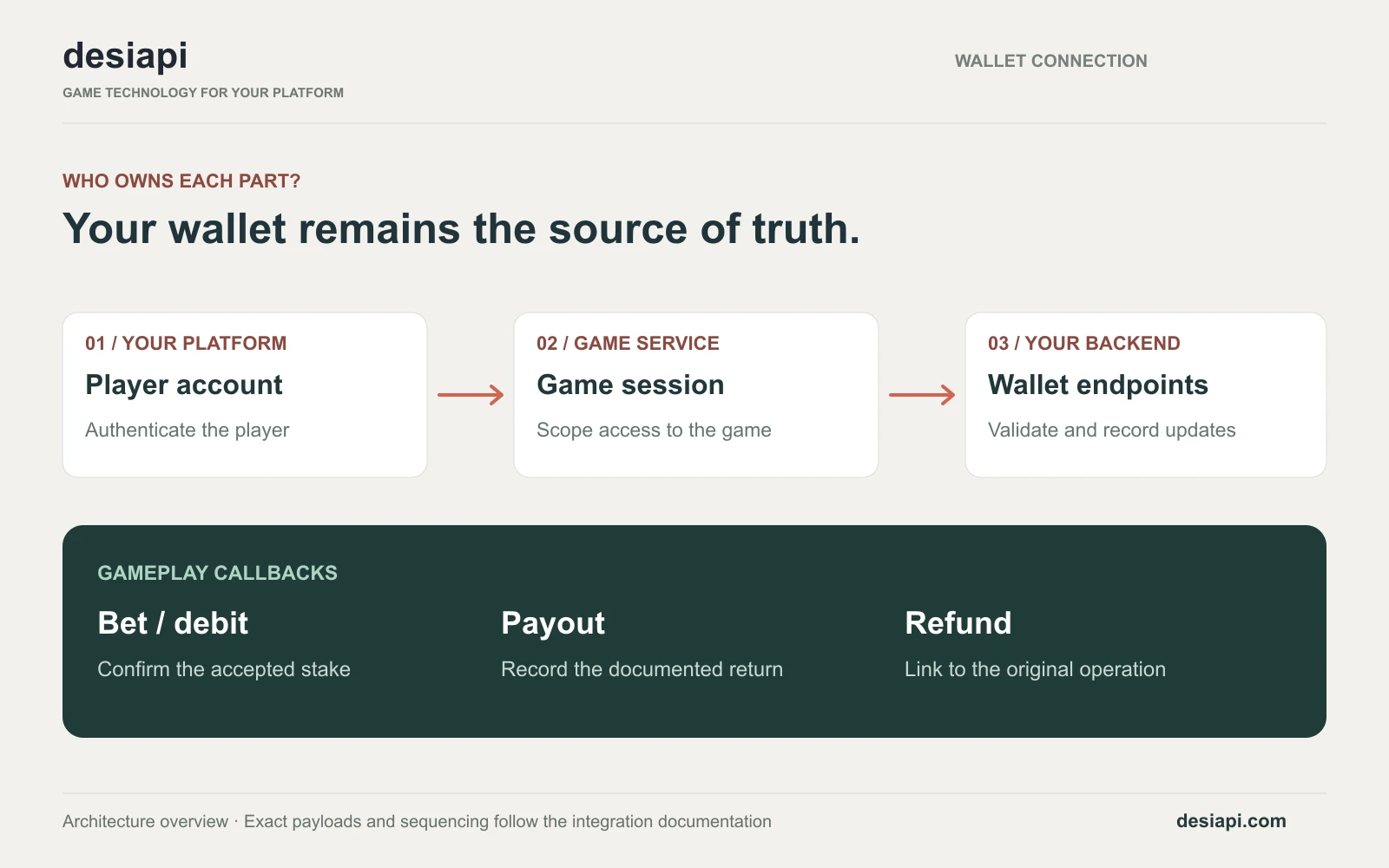
During play, balance checks ask your backend what funds are available. A bet requires a wallet debit; a winning settlement creates a payout; some cancelled or unaccepted operations may need a refund. The exact callback sequence, identifiers and response format must follow the supplied integration documentation.
For example, imagine a sandbox wallet with 1,000 virtual units and a stake of 100. A confirmed debit leaves 900. If the documented settlement returns a total payout of 180, the resulting balance is 1,080. This is an illustrative accounting example, not a DesiAPI game payout promise. Confirm whether each payout field represents total return or profit before implementing it.
Reliability depends on handling uncertainty. A request may time out after your wallet has already applied it. Your wallet should recognise the same operation on a repeat delivery and avoid applying it twice. Save the original operation reference and result so support teams can reconcile the event.
What platform owners should evaluate beyond gameplay
- Administrator controls: who can manage games and settings, and which controls apply to your business?
- Round history: can your team trace a player’s stake, result, payout and refund?
- Reporting: do game records and wallet records support reconciliation?
- Mobile behaviour: are controls usable on the devices and screen sizes your players use?
- Operational support: who owns an incident and what evidence is needed to resolve it?
DesiAPI provides administrator controls, game settings, round history and reporting. Ask the team to demonstrate the controls relevant to your selected games, and confirm the available configuration before agreeing the launch scope. Do not assume that every feature shown by another supplier is included.
How to plan Casino API integration
Start with a short integration brief: your backend stack, existing wallet model, stable player identifiers, selected games, intended currencies, expected traffic and target markets. Assign one developer to own the wallet contract and one business contact to approve operational requirements. Small decisions about amount precision or session expiry can otherwise become launch blockers.
Use a sandbox wallet to validate normal bets and settlements, then review duplicate callbacks, insufficient funds, expired sessions and interrupted requests. Agree the evidence required before production access. Our Casino Games API integration guide walks through that sequence in more detail.
Casino API pricing: compare the complete scope
Casino API pricing only becomes meaningful when two quotes cover the same service. Ask suppliers whether their proposal includes setup, recurring access, usage or revenue-based charges, minimum commitments, support and any additional environments. These are possible commercial components to clarify, not a statement of DesiAPI’s billing model.
Your internal development and ongoing operations also have a cost. Include wallet integration, monitoring, customer support and reconciliation in your budget. DesiAPI pricing should be confirmed directly for the selected games and integration scope; this guide does not advertise an unverified price or a guaranteed launch date.
Frequently asked questions
Can I add games without replacing my website?
That is the intended integration model: connect game sessions and wallet callbacks to an existing platform. Your team still needs to implement and review the backend connection, launch flow and operational requirements.
Does a Casino Games API include player deposits and withdrawals?
Game wallet callbacks and payment processing are different responsibilities. DesiAPI connects games to your existing wallet. Do not assume that payment collection, deposits or withdrawals are included in a game API service.
Does a working demo prove production readiness?
A demo shows the game experience. Production readiness also depends on your wallet implementation, access controls, operational checks and the requirements of your intended markets. Confirm any required certification or approval for the exact product and jurisdiction.
Turn your requirements into an integration brief
Choose the experiences you need, document wallet ownership and compare suppliers against the same requirements. Use our Casino API provider checklist to prepare your evaluation. When you are ready, contact DesiAPI with your website or application, preferred games and backend stack so the team can discuss a suitable integration scope.
Sources and further reading
For supplier models and integration context, see SPRIBE’s company overview, SOFTSWISS Game Aggregator, Slotegrator APIgrator and Hub88. These are independent providers’ own descriptions. Their services, commercial terms and availability must be checked directly; references do not imply a partnership with DesiAPI.
Review the Casino API integration flow, explore API pricing and quote requirements, or send your project brief to DesiAPI.