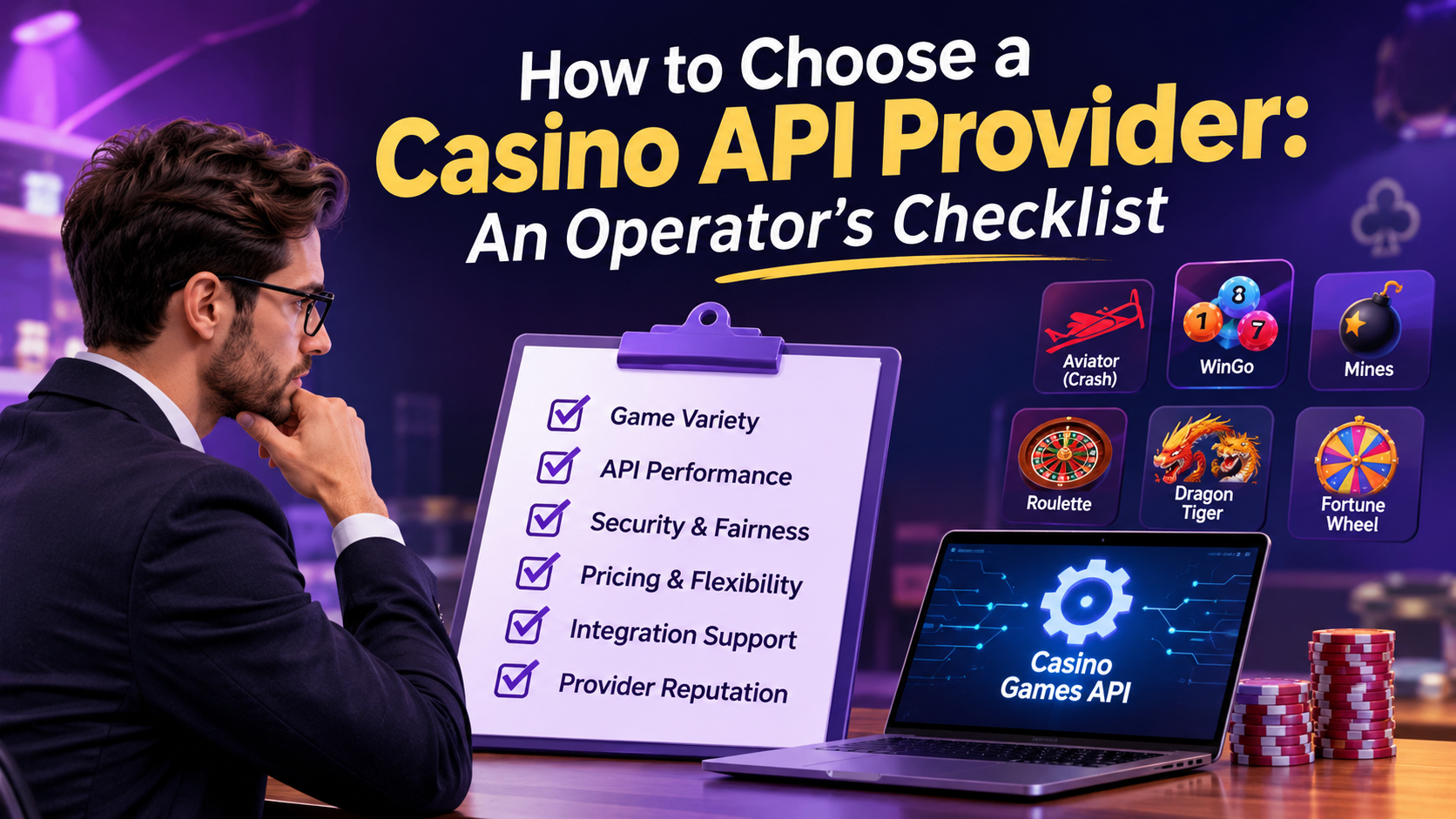
How to Choose a Casino API Provider: An Operator’s Checklist
Choosing the right Casino API provider is one of the most important decisions when building or expanding an online gaming platform. A reliable API can help businesses introduce new game experiences, connect existing player accounts, automate wallet transactions and manage game activity through a structured technical environment.
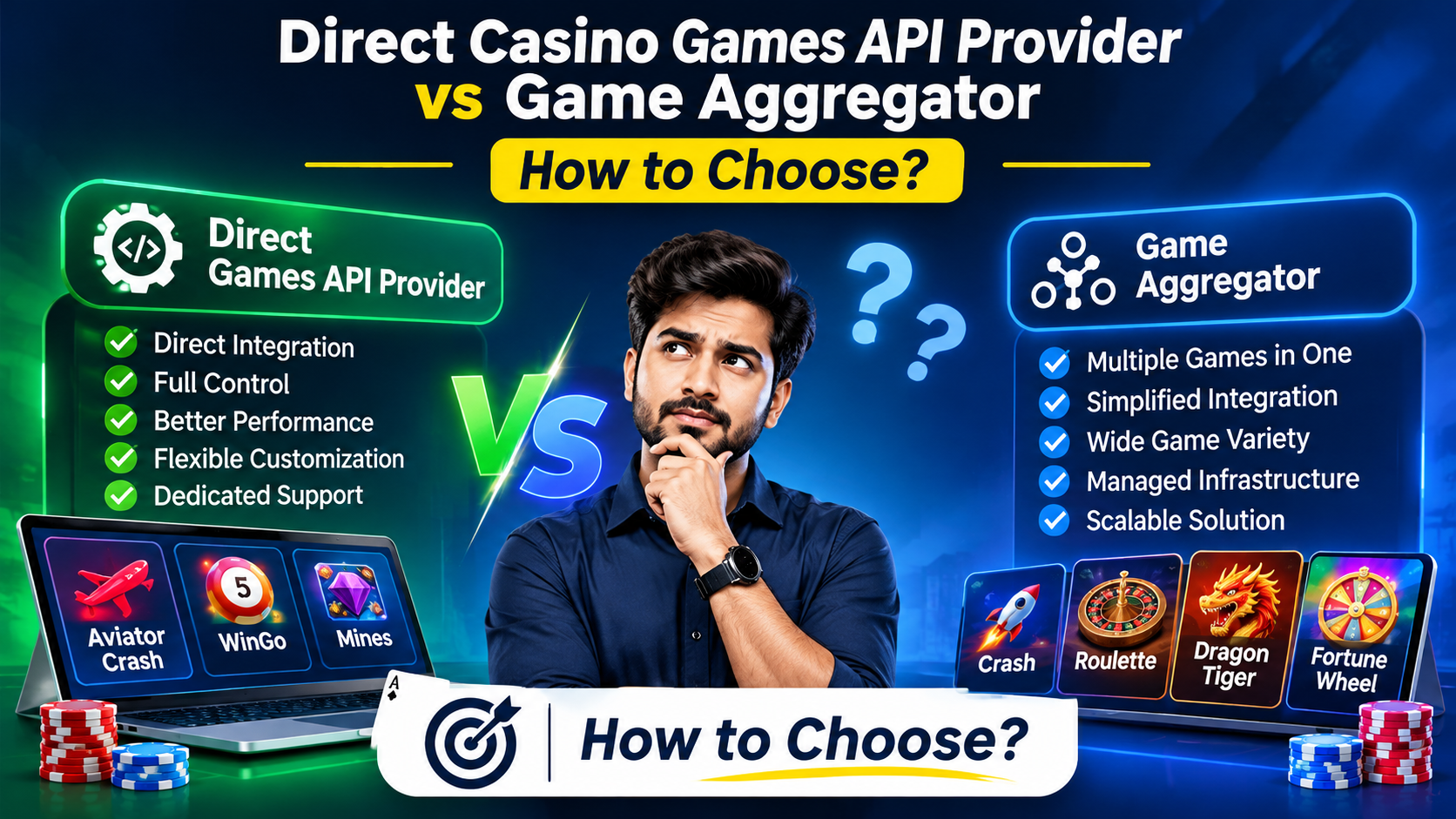
However, not every Casino Games API provider offers the same products, integration methods or operational features. Some companies operate as game aggregators, connecting operators with multiple third-party studios, while others develop and supply their own games through direct API integrations.
For platform owners, software development companies and gaming operators, understanding these differences is essential before selecting a technology partner.
A game may look impressive in a demo, but the actual integration involves much more than its interface. Player authentication, session management, balance verification, bet processing, payouts, refunds, administrator controls and reporting must all work together correctly.
In this guide, we explain how to evaluate a Casino API provider using a practical operator's checklist. We also cover the important technical and commercial questions businesses should ask before integrating games into an existing website or application.
1. Understand Your Business and Game Integration Requirements
Before contacting a Casino API provider, define what your platform actually needs.
Different businesses have different requirements. An established gaming platform may already have player registration, authentication, an administrator panel and wallet management. In that situation, the business may only need additional game experiences that connect with its existing infrastructure.
A newly developed platform, on the other hand, may require more development work before it can integrate an external game API.
Start by preparing a list of your requirements.
- Do you already have a website or mobile application?
- Does your platform have an existing player account system?
- Do you manage your own player wallet?
- Which game categories do you want to introduce?
- Do you require real-time balance verification?
- Does your development team have experience working with APIs?
- Do you need administrator controls and round history?
- Which countries and jurisdictions are relevant to your intended operation?
These questions help establish the actual project scope.
For example, a business interested in a Crash Game API may have different integration requirements from an operator looking for Roulette or Dragon Tiger games.
We recommend separating essential launch requirements from features that may be needed later. This makes it easier to compare providers without paying attention to features that are not relevant to your current project.
2. Check Whether the Provider Develops Its Own Games or Aggregates Third-Party Content
One of the first things to investigate is the provider's business and distribution model.
The term Casino API provider is used by different types of companies. Some companies develop their own games, while others aggregate content from multiple independent game studios.
Understanding this distinction helps businesses evaluate ownership, product availability, technical responsibilities and commercial arrangements.
Direct Casino Games API Provider
A direct provider supplies its own game implementations through an API. The provider is responsible for its own game products and the associated integration specifications.
This model can be useful when an operator wants a focused collection of games with a defined integration process.
Casino Game Aggregator
A game aggregator connects operators with games from multiple third-party developers through a common integration.
This model can be suitable for businesses that need access to a broad catalogue containing multiple studios and game categories.
Questions to Ask About Game Ownership
Before signing an agreement, ask:
- Who develops the games?
- Who owns or controls the relevant game implementations?
- Is the provider authorised to distribute the products it offers?
- Are third-party studios involved?
- Can the provider explain its content delivery model?
- Are the games and their commercial terms clearly identified?
Do not assume that two games with similar names are identical products.
For example, an Aviator-style Crash Game API and SPRIBE's Aviator are not automatically the same product. Always verify the exact game developer, product identity and distribution rights.
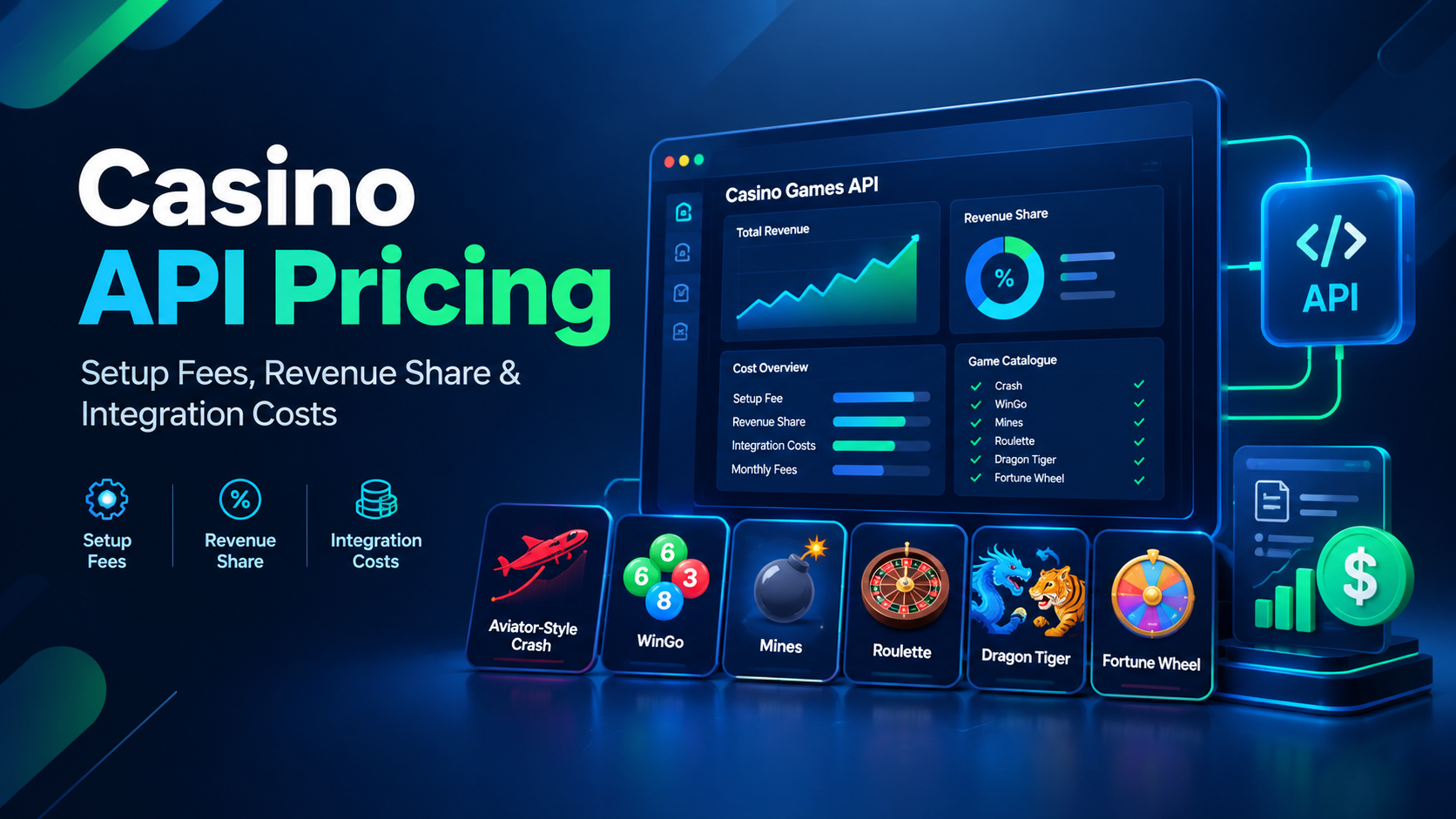
DesiAPI follows a direct game development and supply model. Our catalogue includes six of our own game implementations: Aviator-style Crash, WinGo, Mines, Roulette, Dragon Tiger and Fortune Wheel.
This makes DesiAPI relevant to businesses looking for these specific game experiences through an API integration rather than a multi-studio aggregation catalogue.
3. Evaluate the Available Casino Games API Catalogue
Game availability is another important factor when comparing providers.
A provider may offer an extensive catalogue, but the number of games alone does not determine whether the solution fits your business.
Instead, examine the actual game categories, functionality and user experience.
Here are six game categories that operators and development teams may consider.
Aviator-Style Crash Game API
A Crash Game API provides a game experience built around a changing multiplier and a cash-out interaction.
When evaluating a Crash Game API, examine:
- Game launch and session handling.
- Round start and end information.
- Bet confirmation.
- Multiplier and result presentation.
- Cash-out event handling.
- Round history.
- Wallet transaction callbacks.
Businesses specifically searching for an Aviator Game API should also verify whether they require an original Aviator product or an independently developed Aviator-style crash experience.
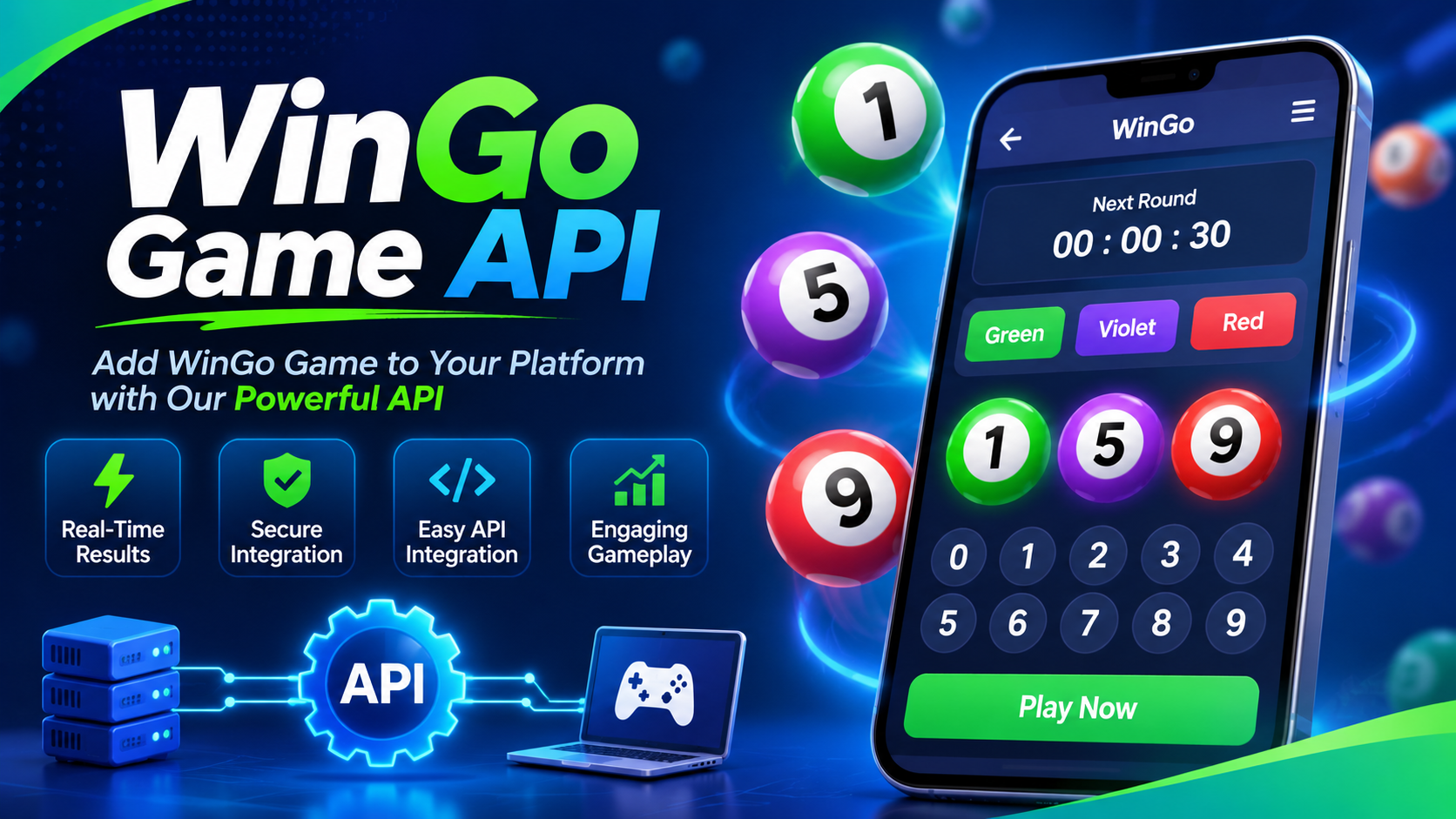
WinGo Game API
WinGo is a colour and number prediction-style game format organised around individual rounds.
Important evaluation points include:
- Round identification.
- Round deadlines.
- Available game options.
- Bet submission and confirmation.
- Result information.
- Round history.
- Transaction status updates.
A well-structured WinGo Game API should provide the information needed by the platform to connect gameplay activity with its existing player and wallet systems.
Mines Game API
Mines is an interactive game format in which users make selections during a round.
When reviewing a Mines Game API, consider the following:
- Game session creation.
- Selection and interaction handling.
- Round state management.
- Result communication.
- Session recovery behaviour.
- Wallet transaction consistency.
The integration should make it clear how an active game session is identified and how its final outcome is communicated to the platform.
Roulette Game API
Roulette is a table-style game with a structured betting interface and defined outcomes.
Check the following features:
- Available betting options.
- Round identification.
- Bet confirmation.
- Result communication.
- Transaction history.
- Desktop and mobile interface compatibility.
The provider should clearly explain how the game communicates its outcomes and associated wallet operations.
Dragon Tiger Game API
Dragon Tiger is a card-based game format.
When comparing a Dragon Tiger Game API, review:
- Game round management.
- Available betting selections.
- Result communication.
- Bet and payout callbacks.
- Player session handling.
- Historical round information.
The exact game rules and available options should be documented before development begins.
Fortune Wheel Game API
Fortune Wheel provides a wheel-based game experience with different possible outcomes.
Evaluate:
- Game configuration.
- Available selections.
- Round information.
- Result presentation.
- Wallet callbacks.
- Round history.
The administrator should also have access to the relevant game settings and reporting features.
Nano Banana Image Prompt:
Create a premium 16:9 casino game API technology illustration featuring six distinct game interface previews: Crash, WinGo, Mines, Roulette, Dragon Tiger and Fortune Wheel. Arrange them in a clean professional SaaS dashboard layout with dark navy background, blue and violet highlights, realistic UI elements and readable game names. No logos or watermark.
4. Examine Casino API Integration Capabilities
API integration is one of the most important parts of selecting a provider.
A game API must communicate correctly with the existing website or application. It should not operate as an isolated product that cannot exchange the necessary information with the platform.
Before choosing a Casino API provider, request the technical documentation and ask your development team to review the complete integration process.
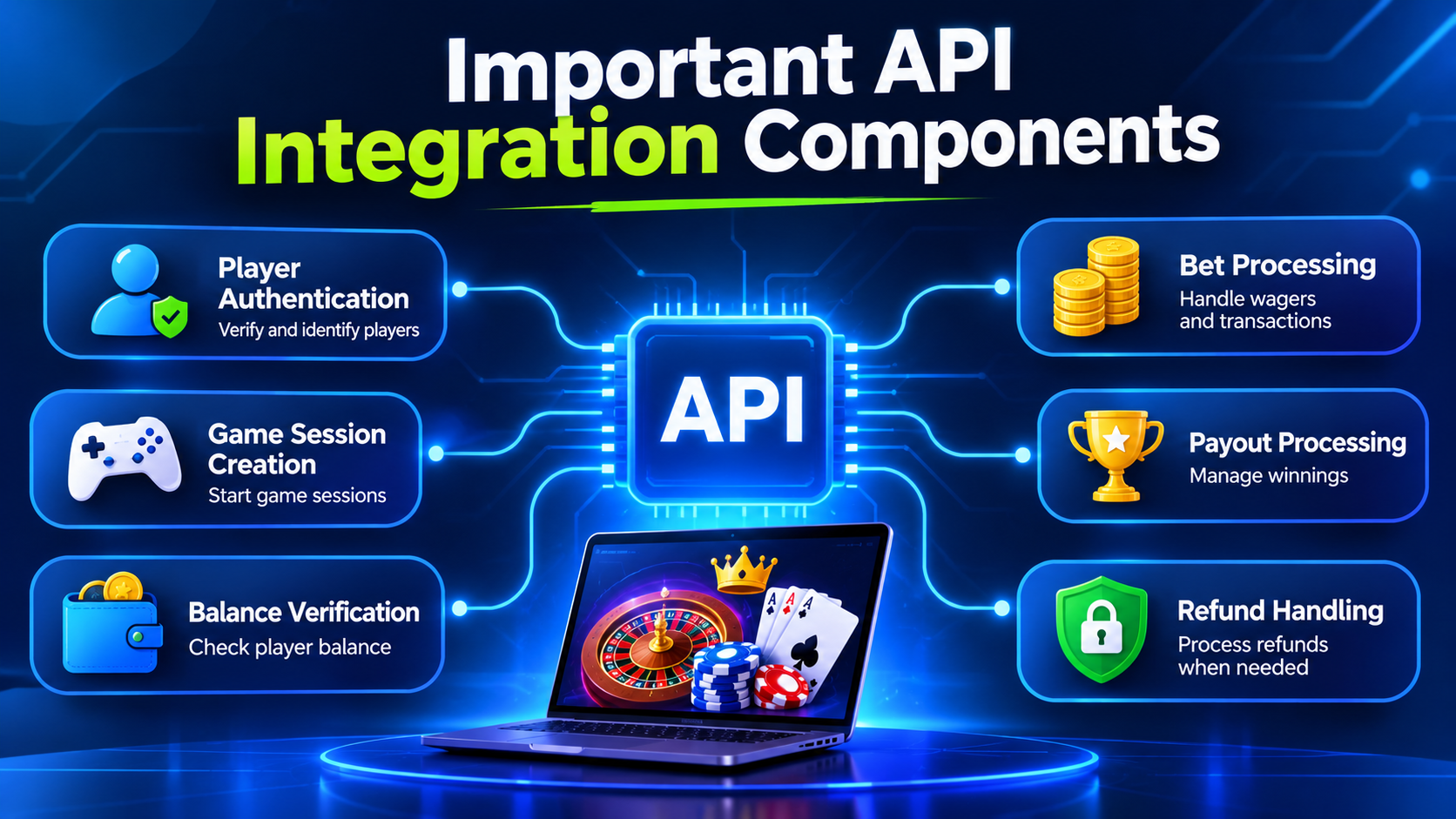
Important API Integration Components
Player Authentication
The platform should have a defined method of identifying players before launching a game.
The provider should explain how player identities are associated with game sessions and how unauthorised access is prevented.
Game Session Creation
A game session connects a player to a specific game experience.
Ask how sessions are generated, how long they remain valid and what happens when a player refreshes the page or loses connectivity.
Balance Verification
If the platform maintains its own wallet, the game integration needs a defined method of obtaining the player's available balance.
Confirm the expected request format, response structure and error handling.
Bet Processing
When a player initiates a game action that involves a stake, the platform and game integration must process the corresponding transaction correctly.
Ask how requests are authenticated, identified and acknowledged.
Payout Processing
The provider should explain how payout information is communicated to the existing wallet system and how completed transactions are identified.
Refund Handling
Unsuccessful, cancelled or uncertain operations require a clearly documented recovery process.
The provider should explain when refunds are triggered, how duplicate requests are handled and how the original transaction can be identified.
Why API Documentation Matters
Technical documentation allows developers to understand the integration before writing production code.
It should explain:
- Available API endpoints.
- Authentication requirements.
- Request and response formats.
- Required parameters.
- Callback specifications.
- Error codes.
- Transaction identifiers.
- Session requirements.
- Testing procedures.
A provider that cannot explain its integration workflow clearly may create unnecessary development challenges.
At DesiAPI, our game APIs connect with existing player accounts and wallet systems through player sessions, balance checks and callbacks covering bets, payouts and refunds. The exact integration protocol and responsibilities should be confirmed with our technical team before implementation.
5. Verify Existing Wallet Integration and Transaction Handling
Wallet integration deserves special attention because it connects gameplay activity with the operator's financial records.
Many businesses already maintain their own player accounts and wallet infrastructure. They may not want to replace their existing system simply to introduce additional games.
In this situation, the Casino Games API should support a clearly defined connection with the existing wallet.
Single Wallet Integration
In a single-wallet arrangement, the operator maintains the player balance in its existing platform.
The game integration communicates with the platform to request balance information and process the relevant gameplay transactions.
This approach can help businesses maintain a central wallet system across their platform.
Important Wallet Integration Questions
Before proceeding, discuss these points with the provider:
| Area | What to verify |
|---|---|
| Player identification | How is the player identified? |
| Balance check | How is the current balance retrieved? |
| Bet request | How is a stake communicated? |
| Payout callback | How is a completed payout reported? |
| Refund callback | How are failed or reversed operations handled? |
| Transaction ID | How is each operation uniquely identified? |
| Duplicate requests | How are repeated requests handled? |
| Reconciliation | How can the operator compare transaction records? |
| Error handling | What happens when a request times out? |
Idempotency and Duplicate Transactions
One technical detail that operators should never overlook is idempotency.
Imagine a wallet request reaches the operator's server and the transaction is successfully processed. However, the response does not reach the original sender because of a temporary network issue.
If the same request is sent again, the platform must be able to recognise the original operation instead of processing it as a completely new transaction.
This is why transaction identifiers, duplicate request handling and recovery procedures should be discussed before integration.
Transaction Reconciliation
The operator should also be able to compare game activity with wallet records.
Useful information includes:
- Player identifier.
- Game identifier.
- Round identifier.
- Transaction identifier.
- Stake amount.
- Payout amount.
- Refund information.
- Transaction status.
- Timestamp.
Clear transaction records make it easier for technical and support teams to investigate discrepancies.
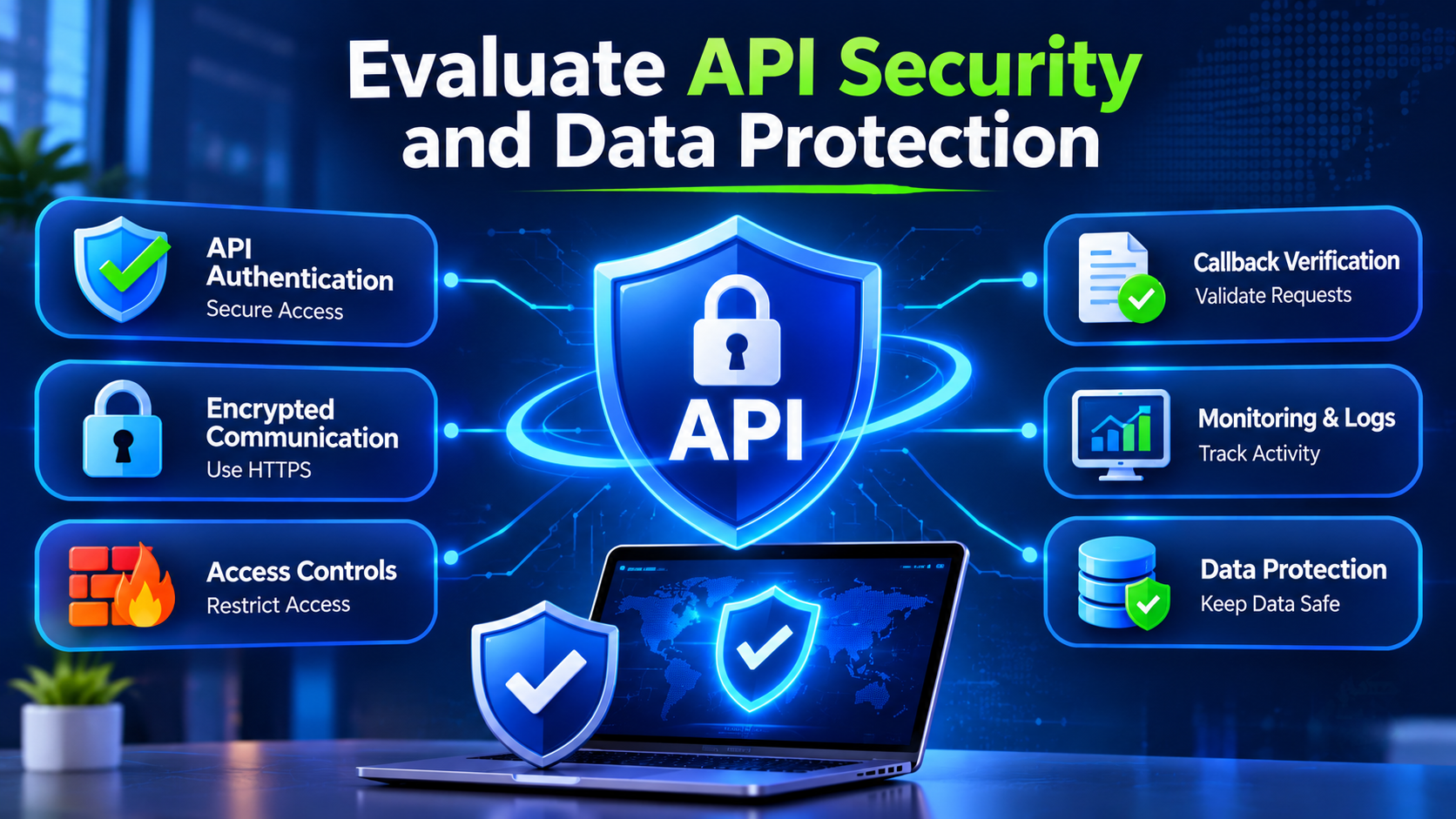
6. Evaluate API Security and Data Protection
Security should be considered before any production integration.
A Casino API may communicate with player accounts, game sessions, transaction information and other platform data. The integration must therefore follow appropriate authentication, access control and data protection practices.
Do not rely only on statements such as secure API or advanced protection. Ask the provider to explain the actual security mechanisms.
Security Features to Discuss
API Authentication
Understand how API requests are authenticated and whether credentials are generated separately for testing and production environments.
Encrypted Communication
Check whether communication uses HTTPS and modern TLS configurations.
Access Restrictions
Ask whether access can be restricted using IP allowlisting, permissions or other appropriate controls.
Credential Management
API credentials should be stored securely and should not be exposed in public-facing website code.
Callback Verification
Incoming callbacks should have a documented verification method so that the receiving platform can distinguish authorised requests from unauthorised ones.
Monitoring and Logging
Ask how failed requests, unusual activity and integration errors can be investigated.
Questions for the Provider
- What authentication mechanism is used?
- How are API credentials protected?
- How are callbacks verified?
- Is IP allowlisting supported?
- Are testing and production environments separated?
- What logging information is available?
- How are security incidents communicated?
Security requirements should be documented and reviewed by the operator's development team before production access is enabled.
7. Check the Administrator Panel and Game Management Features
A good game integration should also provide useful administrative visibility.
After the technical integration is completed, the operator needs a way to review game activity and manage the available configurations.
An administrator panel can help authorised team members monitor different aspects of the integrated games.
Important Administrator Features
Game Settings
Check whether game-specific configurations can be reviewed and managed from an administrator interface.
Round History
Historical round information helps support teams investigate questions about previous game activity.
Reporting
Reports should provide relevant information about game activity and associated transactions.
Access Permissions
Ask which administrator roles are available and whether different permissions can be assigned to different team members.
Game Availability Controls
Understand how games can be enabled, disabled or configured according to the agreed product scope.
Why Reporting Matters
Imagine a player reports that a transaction appears to be missing.
Without useful records, the support team may need to investigate several systems manually.
With accessible round history and transaction information, the team can begin its investigation using the relevant player, game, round and transaction identifiers.
At DesiAPI, we provide administrator controls, game settings, round history and reporting. Businesses should review the available controls and reporting scope during their evaluation.
8. Test Game Performance on Desktop and Mobile Devices
A game that works correctly on a desktop browser may not provide the same experience on a mobile device.
Many gaming platforms are accessed through smartphones, making responsive presentation and consistent interaction important evaluation points.
Before selecting a Casino API provider, test the actual game demos on different devices.
Desktop Testing
Review:
- Game loading behaviour.
- Interface alignment.
- Control accessibility.
- Screen resolution compatibility.
- Round information visibility.
- Session behaviour.
Mobile Testing
Review:
- Responsive layout.
- Button placement.
- Touch interaction.
- Screen orientation.
- Text readability.
- Loading behaviour.
- Reconnection experience.
Network Testing
Do not test only with a fast and stable internet connection.
Ask how the game behaves when:
- A request takes longer than expected.
- A player refreshes the browser.
- The network connection is interrupted.
- A session expires.
- A callback is delayed.
- A player attempts to repeat an action.
The purpose of testing is to identify integration problems before they affect the live platform.
A public demo is useful for reviewing the game interface, but it should not be treated as proof that the production wallet integration has passed testing.
9. Compare Casino API Pricing and Commercial Terms
Casino API pricing is another important consideration when choosing a provider.
Different providers may use different commercial models depending on the game catalogue, integration requirements, access arrangements and ongoing services.
A lower initial quote does not necessarily mean lower total project costs.
Before making a decision, request a written commercial proposal that clearly describes the services included.
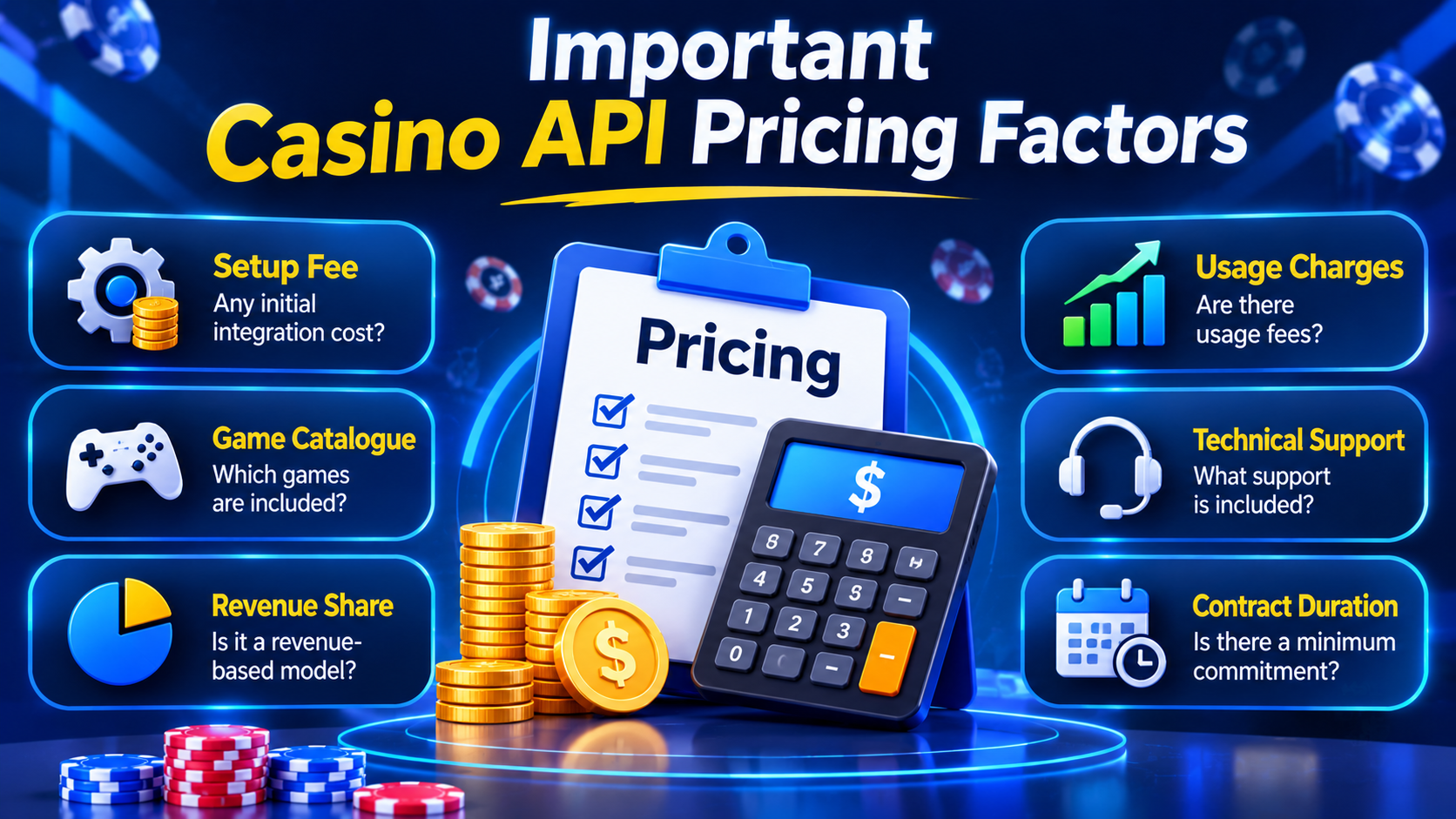
Important Casino API Pricing Factors
| Pricing Component | Questions to Ask |
|---|---|
| Setup fee | Is there an initial integration or onboarding charge? |
| API access | What access is included in the agreement? |
| Game catalogue | Which games are included? |
| Revenue share | Does the provider use a revenue-based model? |
| Usage charges | Are there usage-related fees? |
| Technical support | What support is included? |
| Development | Is custom development charged separately? |
| Maintenance | Are ongoing maintenance services included? |
| Contract duration | Is there a minimum commitment? |
| Additional environments | Are staging and testing environments included? |
These are commercial questions to clarify, not assumptions that every provider charges each type of fee.
Calculate the Total Cost of Integration
The total project budget should consider more than the provider's API charges.
For example:
Total Project Cost = Provider Charges + Development Cost + Infrastructure Cost + Monitoring and Maintenance + Other Agreed Expenses
Your development team should also estimate the work required to connect the API with the existing authentication, wallet and administrator systems.
Ask for a Clear Pricing Proposal
Before proceeding, confirm:
- The exact games included.
- Initial setup requirements.
- Integration responsibilities.
- Ongoing commercial charges.
- Support arrangements.
- Additional development costs.
- Contract and termination conditions.
At DesiAPI, pricing should be discussed according to the selected games, integration scope and business requirements. Contact our team for a proposal based on your actual project.
10. Evaluate Technical Support and Integration Assistance
Technical support becomes especially important when an API is connected to an existing production platform.
Even when documentation is available, developers may need clarification about request parameters, callbacks, transaction errors or session behaviour.
A useful support arrangement should establish how integration questions and technical issues are communicated and resolved.
What to Check Before Choosing a Provider
Documentation Assistance
Can the provider explain its API documentation and integration workflow?
Integration Guidance
Can your development team receive clarification about sessions, wallet requests and callbacks?
Testing Support
Is there a suitable environment for testing integration behaviour before production?
Error Investigation
Can the technical team help investigate failed or unexpected API responses?
Administrator Assistance
Can the provider explain game settings, reporting and available administrative controls?
Escalation Process
Is there a defined process for handling issues that require additional investigation?
Before signing an agreement, confirm support availability, response expectations and responsibilities in writing.
Do not assume that every provider offers round-the-clock support or a particular resolution time unless it is specifically included in the agreement.
11. Review Legal, Licensing and Market Requirements
Regulatory requirements are an essential part of evaluating any gaming technology supplier.
The fact that a game API is technically available does not automatically mean that the operator is authorised to use it in every country or market.
Requirements can differ depending on the business model, game type, jurisdiction and intended operation.
Before production launch, operators should independently review the requirements that apply to their business.
Important Verification Points
- Identify the legal entity providing the API.
- Request relevant product and distribution documentation.
- Verify any licensing or certification claims.
- Confirm applicable market restrictions.
- Review the operator's own licensing obligations.
- Understand applicable age restrictions.
- Review data protection and security obligations.
- Confirm contractual responsibilities.
Where required, obtain advice from qualified legal and regulatory professionals.
A responsible API provider should be able to explain the scope of its product offering and provide relevant documentation for the claims it makes.
12. Understand Testing, Integration and Production Deployment
A structured integration process helps development teams identify problems before a game is made available in a production environment.
The exact process varies between providers, but operators should expect a clear sequence of technical activities.
Step 1: Requirement Discussion
The business shares its existing platform details, selected games, wallet architecture and integration requirements.
Step 2: API Documentation Review
Developers review endpoints, authentication, session management, callback structures and transaction requirements.
Step 3: Development Environment Setup
The technical teams configure the appropriate credentials and testing environment.
Step 4: Player Session Integration
The platform connects its player identification system with the game session workflow.
Step 5: Wallet Callback Integration
Developers connect the required balance checks, bet requests, payouts and refund handling.
Step 6: Functional Testing
The team tests game launches, normal gameplay flows, transaction processing and error scenarios.
Step 7: Reporting and Administrator Review
The operator checks round history, game settings, reporting and administrative permissions.
Step 8: Production Readiness Review
The development team reviews unresolved issues, access restrictions, monitoring and operational responsibilities before launch.
Step 9: Production Deployment
Production access is enabled according to the agreed technical and commercial scope.
Nano Banana Image Prompt:
Create a clean 16:9 technical workflow infographic showing nine stages of Casino API integration: Requirements → Documentation → Environment Setup → Player Session → Wallet Integration → Testing → Admin Review → Production Checks → Launch. Dark navy background, electric blue arrows, green success indicators, modern SaaS design, clear English labels.
13. Common Mistakes to Avoid When Selecting a Casino API Provider
Businesses sometimes focus too heavily on the game interface and overlook the technical details behind the product.
The following mistakes can create unnecessary complications during development and operation.
Choosing Only by Catalogue Size
A large game catalogue may be attractive, but not every platform needs thousands of games.
Evaluate whether the provider offers the actual games your business wants to integrate.
Ignoring Game Ownership
Never assume that a provider owns or is authorised to distribute every game displayed in its catalogue.
Verify product ownership and distribution rights.
Skipping API Documentation Review
A demo cannot explain the complete integration architecture.
Ask your developers to review the documentation before approving the provider.
Overlooking Wallet Recovery
Duplicate requests, delayed callbacks and uncertain transaction outcomes must be addressed during integration planning.
Ignoring Administrator Features
Without useful reporting and round history, investigating operational questions can become more difficult.
Comparing Prices Without Comparing Scope
A quote covering API access only should not be compared directly with a package that includes additional development or support services.
Skipping Real Device Testing
Always review the game experience on the devices and browsers relevant to your platform.
Assuming Technical Integration Provides Legal Approval
An API integration does not replace the operator's own regulatory responsibilities.
14. Complete Casino API Provider Evaluation Checklist
Before selecting a supplier, use the following checklist to organise your evaluation.
| Evaluation Area | Questions to Confirm |
|---|---|
| Game ownership | Is the game ownership and distribution model clear? |
| Game catalogue | Are the required games available? |
| API documentation | Are endpoints and request formats documented? |
| Authentication | Is player and API authentication explained? |
| Sessions | Is session creation and expiration documented? |
| Wallet integration | Are balance checks and callbacks supported? |
| Bet processing | Are transaction identifiers and duplicate handling explained? |
| Payouts | Is payout communication documented? |
| Refunds | Is refund handling documented? |
| Security | Are authentication and callback verification covered? |
| Administrator panel | Are the required controls available? |
| Round history | Can previous game activity be reviewed? |
| Reporting | Are the required reports available? |
| Performance | Has the game been tested on relevant devices? |
| Support | Are support responsibilities documented? |
| Pricing | Are commercial terms clearly defined? |
| Legal requirements | Are market and product requirements verified? |
| Testing | Is there a clear pre-production testing process? |
We recommend marking each item as:
- Confirmed: The provider has supplied sufficient information or evidence.
- Pending: Additional clarification or documentation is required.
- Not suitable: The provider does not meet the requirement.
Do not approve a provider simply because it scores well in most categories. A critical unresolved issue involving wallet transactions, product rights or legal requirements should be addressed before production deployment.

15. Why Choose DesiAPI for Casino Games API Integration?
At DesiAPI, we focus on providing our own game implementations through API solutions designed for businesses that already operate, or are developing, their own gaming platforms.
Our approach is based on connecting game experiences with existing player accounts and wallet infrastructure rather than requiring businesses to replace their complete platform.
Our Game API Catalogue
We currently provide six game implementations:
Aviator-Style Crash Game API
An independently developed crash-style game experience for platforms looking to introduce multiplier-based gameplay.
WinGo Game API
A colour and number prediction-style game experience organised around individual rounds.
Mines Game API
An interactive game experience with selection-based gameplay.
Roulette Game API
A table-style game experience with structured betting options and result information.
Dragon Tiger Game API
A card-based game experience with defined round information.
Fortune Wheel Game API
A wheel-based game experience with different possible outcomes.
Integration with Existing Player Accounts
Our APIs connect games with the customer's existing player accounts through player sessions and the required integration workflow.
This allows businesses to work with their existing platform architecture.
Existing Wallet Connectivity
DesiAPI supports integration with existing wallet systems through balance checks and callbacks covering bets, payouts and refunds.
The operator's development team implements the required wallet endpoints according to the integration documentation.
Administrator Controls and Reporting
We also provide administrative functionality, including:
- Game settings.
- Administrator controls.
- Round history.
- Reporting.
These features help businesses manage and review their integrated game activity.
Public Game Demos
Businesses can explore our available game experiences through public demos using virtual credits.
The demos are intended for product evaluation and do not involve deposits or withdrawals. Virtual credits have no monetary value.
Designed for Businesses and Development Teams
DesiAPI is intended for:
- Gaming platform owners.
- Online gaming operators.
- Software development companies.
- Application developers.
- Website development businesses.
- Technology companies building gaming platforms.
If you are looking for a Casino API provider with a focused collection of independently developed game experiences, DesiAPI can help you explore the available integration options.
16. Final Thoughts: Choose a Casino API Provider Based on Your Actual Requirements
Choosing a Casino API provider requires more than comparing game names, promotional offers or pricing.
The right decision should be based on product ownership, game availability, integration capabilities, wallet connectivity, security, reporting, administrative functionality and commercial terms.
For businesses with an existing platform, compatibility with their current player account and wallet infrastructure should receive particular attention.
A direct Casino Games API provider may be appropriate when the required games are available through its own implementations. A game aggregator may be more suitable when access to a large collection of third-party studios is the primary requirement.
The most effective approach is to prepare a technical requirements document, review the actual game demos, involve your development team and request clear commercial and integration information before proceeding.
At DesiAPI, we provide six game implementations covering Crash, WinGo, Mines, Roulette, Dragon Tiger and Fortune Wheel, with API connectivity for existing player accounts and wallet systems.
Planning to add games to your existing website or application?
Explore the DesiAPI game catalogue, review the integration requirements and contact our team to discuss your project.
Website: https://desiapi.com/
Frequently Asked Questions (FAQs)
1. What is a Casino Games API?
A Casino Games API is a software interface that allows a website or application to connect with external game functionality. Depending on the provider, it can support game sessions, player identification, balance checks, gameplay transactions, payouts and other integration operations.
2. How do I choose the best Casino API provider?
Compare game ownership, available game categories, API documentation, authentication, wallet integration, transaction handling, security, administrator controls, reporting, support and pricing. Request a demonstration and involve your development team before making a decision.
3. What is the difference between a direct Casino API provider and a game aggregator?
A direct provider supplies its own game implementations. An aggregator connects operators with content from multiple third-party game developers through a common integration. The appropriate model depends on the catalogue and technical requirements of the business.
4. What games should a Casino Games API provider offer?
The required catalogue depends on the platform. Common categories include crash-style games, colour and number prediction games, Mines, Roulette, card games and wheel-based games. Operators should select products based on their actual business requirements.
5. What is a Crash Game API?
A Crash Game API connects a crash-style game experience with an existing website or application. Its integration may include player sessions, round information, bet processing, cash-out interactions and associated wallet callbacks.
6. Is an Aviator-style Crash Game API the same as SPRIBE Aviator?
No. An independently developed Aviator-style crash game is not automatically the same product as SPRIBE's Aviator. Businesses should verify the exact developer, product identity and distribution rights before integration.
7. Can a Casino API connect to an existing player wallet?
Yes, where the provider supports the required integration model. The connection can involve player sessions, balance verification and callbacks for bets, payouts and refunds. The operator's development team must implement the corresponding wallet endpoints.
8. What is included in Casino API integration?
The scope can include authentication, player session creation, game launching, balance checks, transaction callbacks, error handling, reporting and testing. The exact features and responsibilities depend on the provider's documentation and agreement.
9. How much does a Casino API cost?
Casino API pricing varies according to the provider, game selection, integration scope, usage model, support arrangements and commercial agreement. Request a written quotation that clearly identifies initial and ongoing charges.
10. Why are administrator controls and round history important?
Administrator controls help authorised users manage game configurations, while round history provides information about previous gameplay activity. These features can assist with operational reviews and support investigations.
11. Does DesiAPI provide its own Casino Games API?
Yes. DesiAPI provides its own six game implementations: Aviator-style Crash, WinGo, Mines, Roulette, Dragon Tiger and Fortune Wheel. These are available for integration into existing websites and applications, subject to the agreed project scope.
12. Can I test DesiAPI games before integration?
Yes. DesiAPI offers public game demos using virtual credits. These demos are designed for product evaluation and do not involve deposits or withdrawals. Production integration is evaluated separately.
13. Who should use DesiAPI?
DesiAPI is intended for gaming platform owners, operators, software development companies and developers looking to integrate its game implementations into their existing websites or applications.
Explore DesiAPI Game APIs
Aviator-Style Crash | WinGo | Mines | Roulette | Dragon Tiger | Fortune Wheel
Website: https://desiapi.com/
For game availability, integration documentation and commercial requirements, contact the DesiAPI team.
Review the Casino API integration flow, explore API pricing and quote requirements, or send your project brief to DesiAPI.