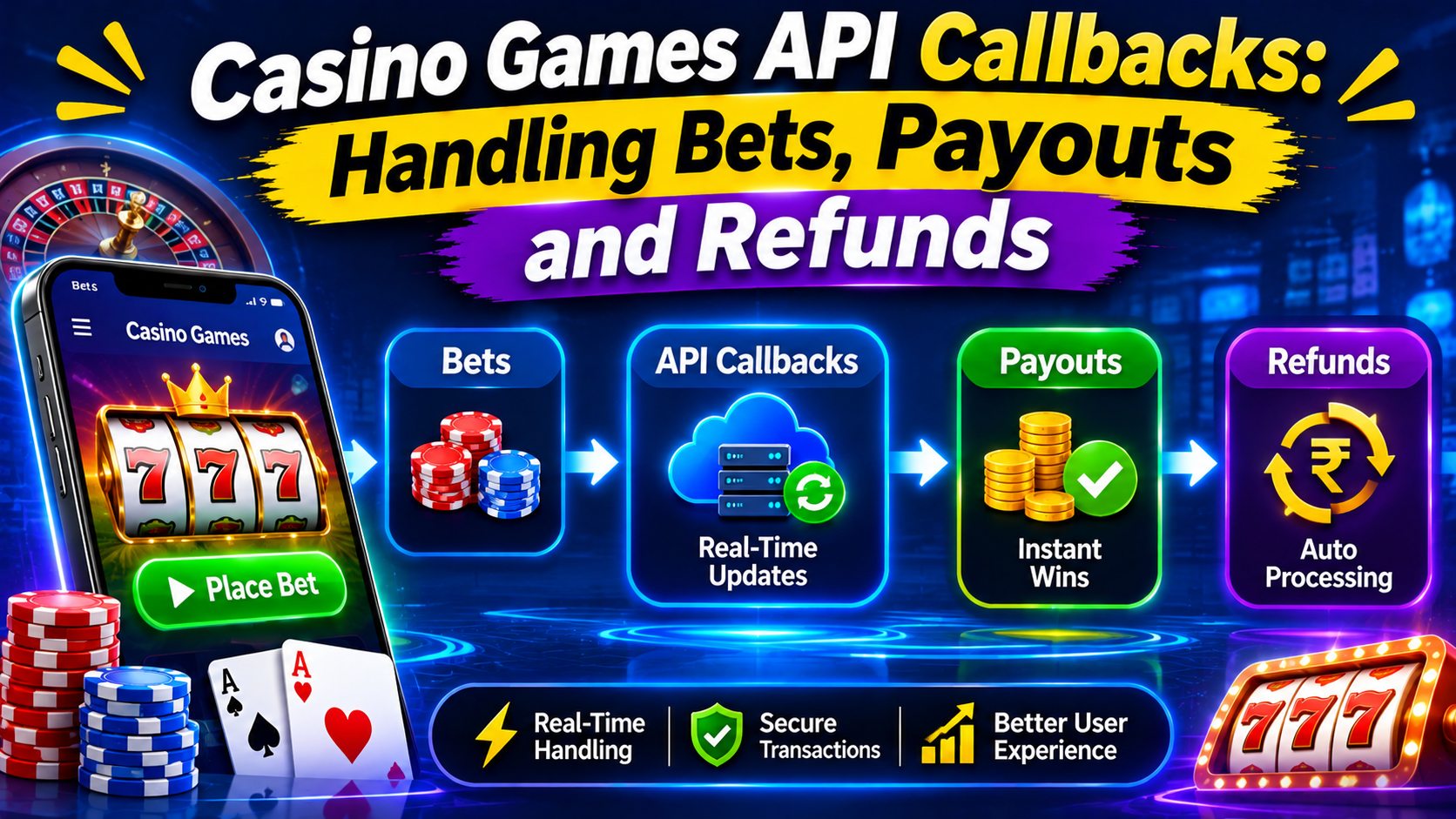
Casino Games API Callbacks: Handling Bets, Payouts and Refunds
When integrating casino games into an existing website or application, connecting the game interface is only one part of the development process. Another important part is making sure that every game transaction is properly communicated between the game system and the platform's wallet.
This is where Casino Games API callbacks become important.
Whether a player is participating in an Aviator-style Crash game, WinGo, Mines, Roulette, Dragon Tiger or Fortune Wheel, the game system needs to communicate transaction information with the platform's backend.
For example, when a player places a bet, the system needs to check their available balance and process the transaction. If the player wins, the payout needs to be credited correctly. If a transaction fails or needs to be reversed, the refund process must also be handled properly.
A well-designed Casino Games API integration uses callbacks to manage these operations and maintain consistent transaction records.
In this guide, we will explain how casino API callbacks work, how bet, payout and refund transactions are handled, and what developers should consider when integrating a Casino Games API into an existing platform.
What Are Casino Games API Callbacks?
Casino Games API callbacks are communication requests sent between a game system and a connected platform's backend to process or report specific events.
They help the game system communicate with the platform when a transaction needs to be processed.
For example, a casino game may need to request a balance check before accepting a bet. After the game round is completed, it may send another callback to process a payout or report a refund.
These callbacks allow the game implementation and the platform's existing wallet system to communicate without requiring the platform to rebuild its entire account management system.
Common callback operations include:
- Player balance checks
- Bet placement and balance deduction
- Winning payout processing
- Refund requests
- Transaction status verification
- Round-related transaction records
The exact callback structure depends on the API provider and its integration documentation.
How Do Casino API Callbacks Work?
A typical Casino Games API integration involves communication between three main components:
- Player Application: The website or mobile application where users access games.
- Game API: The system responsible for running the game and generating game-related transaction events.
- Platform Backend: The existing server responsible for player accounts, wallet balances and transaction records.
When a player interacts with a game, the game system communicates with the platform backend through the configured API endpoints or callbacks.
The platform processes the request and returns an appropriate response.
For example, the general workflow may look like this:
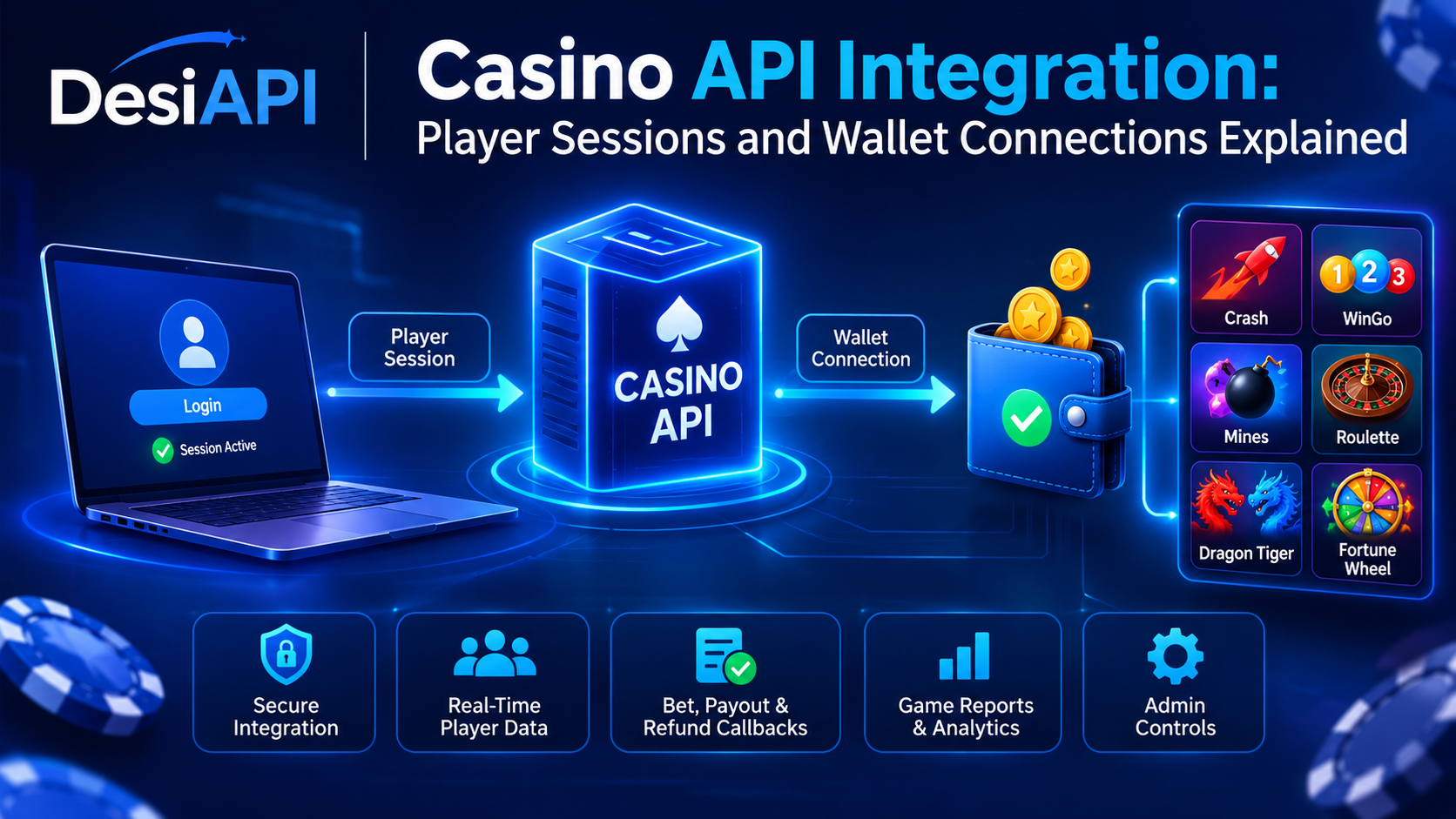
Player → Game Session → Balance Check → Bet Callback → Game Result → Payout or Refund Callback → Transaction Update
This communication helps keep game activity and wallet records connected.
1. Understanding the Bet Callback
The bet callback is one of the most important parts of Casino API integration.
Whenever a player starts a game round or places a bet, the game system needs to communicate with the platform's backend to process the corresponding transaction.
How Does a Bet Callback Work?
A typical bet callback follows these steps:
- The player opens a game using an authorised player session.
- The game system requests the player's available balance.
- The player places a bet.
- The game system sends a bet transaction request to the platform.
- The platform validates the player session and transaction details.
- The platform checks whether sufficient balance is available.
- The platform processes the balance deduction.
- The backend returns a transaction response.
If the request is accepted, the game can continue according to its configured rules.
If the transaction is rejected, the game system should handle the response without incorrectly recording a successful bet.
Important Details in a Bet Callback
Developers should pay attention to the following information:
- Player ID
- Session ID
- Game ID
- Round ID
- Transaction ID
- Bet amount
- Currency
- Transaction timestamp
These fields help the platform identify the transaction and maintain accurate records.
The platform should also ensure that the same bet is not deducted twice if an identical request is received again.
2. Understanding the Payout Callback
A payout callback is used when a completed game round produces a winning amount that needs to be credited to the player's wallet.
After the game result is determined, the game system communicates the payout information to the connected platform.
How Does a Payout Callback Work?
A typical payout workflow includes:
- The game round is completed.
- The game system determines the result according to its game rules.
- The payout amount is calculated.
- A payout callback is sent to the platform backend.
- The platform validates the player and transaction details.
- The payout is processed according to the applicable transaction rules.
- The updated balance and transaction status are returned.
For example, suppose a player starts with a wallet balance of ₹1,000 and places a ₹100 bet.
After the bet is accepted, the balance becomes ₹900.
If the game produces a payout of ₹180, the platform credits the amount and the resulting balance becomes ₹1,080.
This is a simplified example to explain wallet transaction handling. Actual payout calculations depend on the game's rules and transaction model.
What Should Developers Validate?
Before processing a payout, the platform should check:
- Whether the player session is valid.
- Whether the game round exists.
- Whether the payout belongs to the correct player.
- Whether the transaction ID is unique.
- Whether the payout has already been processed.
- Whether the amount matches the authorised game transaction.
These checks help prevent duplicate credits and incorrect wallet updates.
3. Understanding the Refund Callback
Not every game transaction completes successfully.
Sometimes a network interruption, server error or unexpected game event can affect transaction processing.
In such situations, a refund callback may be required to reverse an eligible transaction.
A refund generally restores an amount that was previously deducted from the player's wallet.
How Does a Refund Callback Work?
A typical refund process may follow these steps:
- The game system identifies a transaction that requires reversal.
- A refund request is sent to the platform backend.
- The platform identifies the original transaction.
- The original transaction status is checked.
- The refund amount is validated.
- The platform processes the balance reversal.
- The updated transaction status is returned.
Why Is Refund Handling Important?
Without proper refund handling, failed transactions can create differences between the game system and the platform's wallet records.
For example, if a bet amount is deducted but the corresponding game round cannot be completed, the system may need to reverse that eligible transaction.
A proper refund callback helps maintain accurate transaction history and improves the reliability of the integration.
Developers should always connect a refund with its original transaction instead of treating it as an unrelated wallet credit.
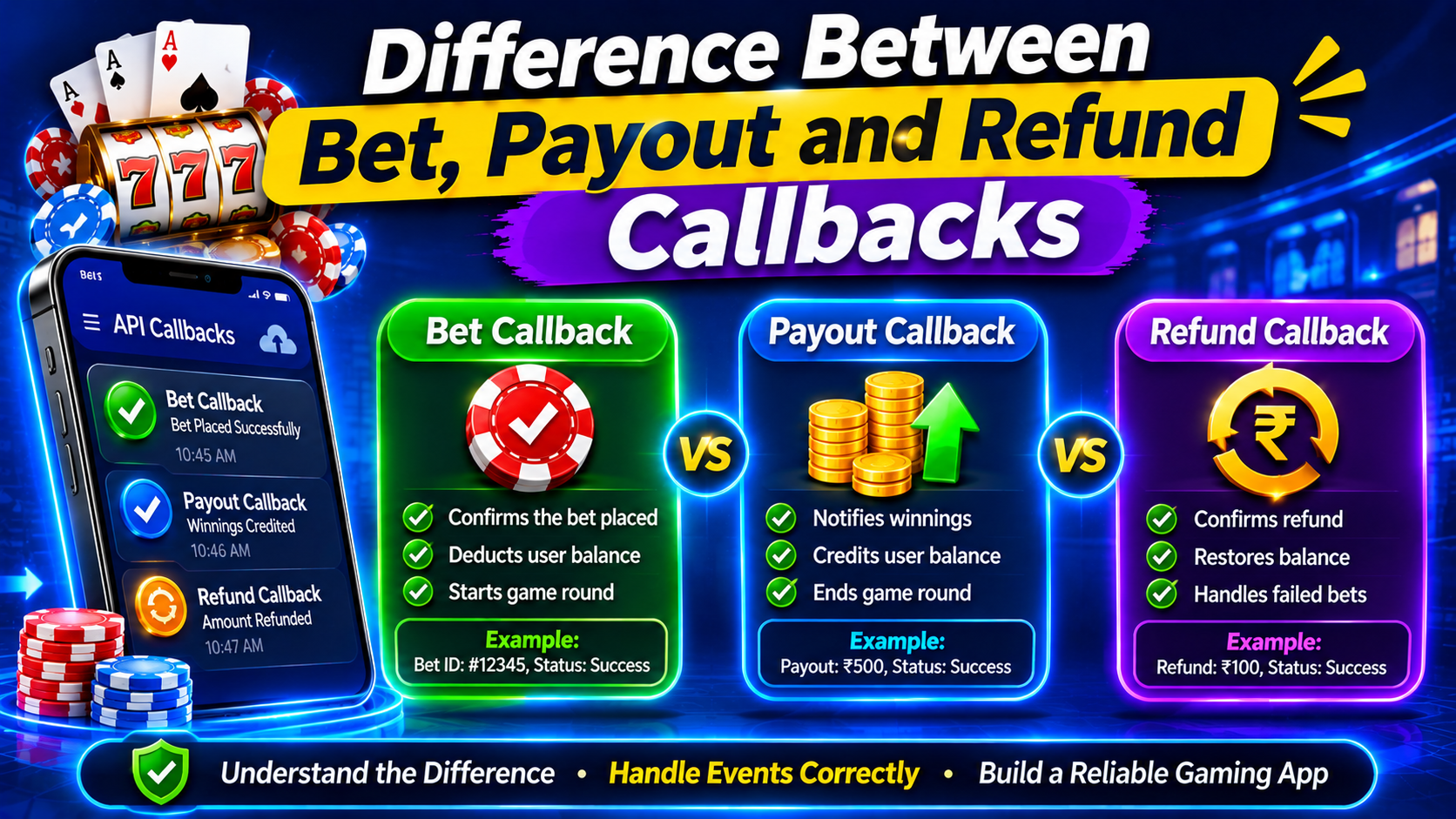
4. Difference Between Bet, Payout and Refund Callbacks
Although all three callbacks are related to wallet transactions, their purposes are different.
| Callback Type | Main Purpose | Wallet Operation |
|---|---|---|
| Bet Callback | Process a player's bet | Deduct balance |
| Payout Callback | Process a winning amount | Credit balance |
| Refund Callback | Reverse an eligible transaction | Restore balance |
These three operations form an important part of the wallet communication process in a Casino Games API integration.
Each transaction should have its own unique reference and status so developers can track what happened during a game round.
5. Why Player Sessions Are Important in Casino API Integration
Player sessions connect the game system with the platform's existing user accounts.
Instead of creating a completely separate account for every game, a compatible Casino Games API can use the platform's player session mechanism.
A typical session workflow includes:
- The player logs into the main platform.
- The platform creates or authorises a player session.
- The game system receives the required session information.
- The player accesses the selected game.
- The game communicates with the platform using the authorised session.
Session validation is important because it helps ensure that wallet requests belong to the correct player.
Developers should use secure session tokens, expiry controls and server-side validation to protect player accounts.
6. Common Problems in Casino API Callbacks
Even with proper documentation, developers may encounter issues during integration.
Understanding these problems before deployment can help reduce technical errors.
Duplicate Transaction Requests
Sometimes a callback may be delivered more than once due to network retries or timeout conditions.
If the backend processes every request independently, the same bet could be deducted or the same payout credited multiple times.
Solution: Implement idempotency using unique transaction identifiers.
Network Timeouts
A callback may reach the platform, but the response may not reach the game system within the expected time.
This can create uncertainty about whether the transaction was processed.
Solution: Use transaction status verification and safe retry mechanisms instead of blindly submitting a new transaction.
Incorrect Player Sessions
An expired or invalid session may cause balance and transaction requests to fail.
Solution: Validate session credentials on every relevant request and handle expired sessions appropriately.
Wallet Balance Mismatch
The game system and platform may display different balances if transaction processing is interrupted.
Solution: Maintain a central wallet ledger and reconcile transaction records using unique references.
Invalid Transaction Amounts
Incorrect amount formats or unsupported currency values can cause processing errors.
Solution: Validate transaction amounts, currency and request parameters before processing.
7. Best Practices for Secure Casino API Integration
A reliable Casino Games API integration requires more than simply connecting endpoints.
Developers should follow good backend practices to keep transaction processing consistent and secure.
Use Unique Transaction IDs: Every bet, payout and refund should have a unique transaction reference.
Implement Idempotency: Repeated callback requests should not create duplicate wallet operations.
Validate API Authentication: Verify callback signatures or authentication credentials according to the provider's documentation.
Use Secure Connections: Use HTTPS for communication between the game system and platform backend.
Maintain Transaction Logs: Store transaction IDs, player IDs, round IDs, amounts and processing statuses.
Handle Failed Requests: Configure suitable retry logic and error responses.
Keep Wallet Updates Atomic: Balance changes and transaction records should be committed together to avoid inconsistent wallet states.
Implement Reconciliation: Regularly compare game transaction records with platform wallet records to identify unresolved differences.
These practices help create a more maintainable and reliable API integration.
8. How DesiAPI Handles Game and Wallet Integration
DesiAPI provides its own game implementations through APIs that businesses can integrate into their existing websites and applications.
The integration approach is designed to connect games with the platform's existing player accounts and wallet infrastructure.
DesiAPI currently offers six game experiences:
- Aviator-style Crash
- WinGo
- Mines
- Roulette
- Dragon Tiger
- Fortune Wheel
The APIs support integration workflows involving player sessions, balance checks and callbacks for bets, payouts and refunds.
Developers can also work with additional platform features, including:
- Administrator controls
- Game settings
- Round history
- Transaction reporting
- Public game demos with virtual credits
- Player session integration
- Wallet callback integration
This approach allows platform owners and software development teams to connect game functionality with their existing software infrastructure.
Rather than rebuilding the entire player account and wallet system, developers can integrate the supported game APIs into their current platform architecture.
To understand the available integration methods, developers should review the technical documentation and confirm the supported callback fields and transaction requirements.
9. What Should You Check Before Choosing a Casino API Provider?
Selecting a Casino API provider is an important decision for businesses planning to expand their existing gaming software.
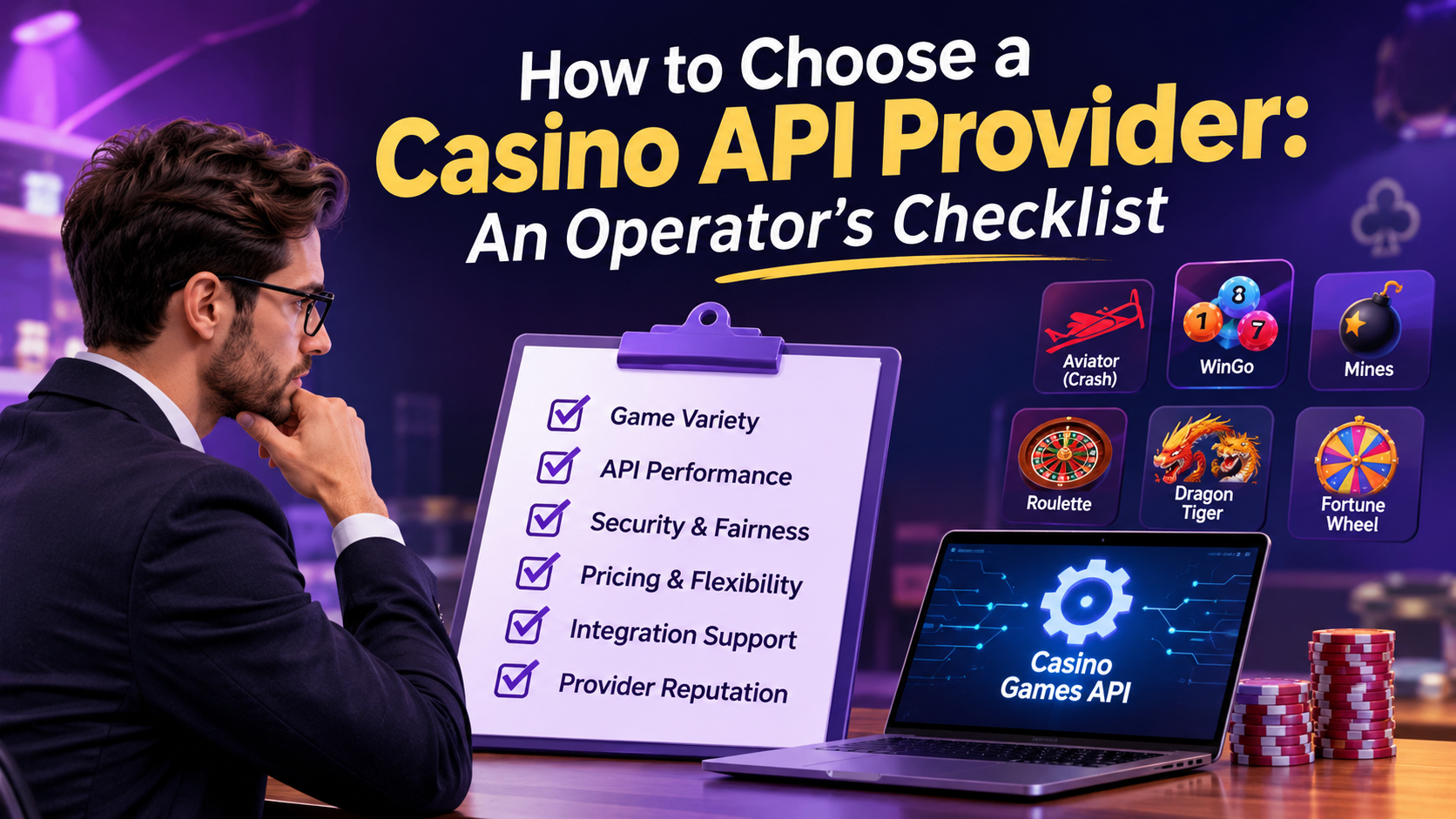
Before choosing a provider, consider the following factors:
- Game Availability: Check whether the provider offers the game types required by your platform.
- API Documentation: Review the available endpoints, authentication methods and callback structures.
- Wallet Integration: Understand how player balances, bets, payouts and refunds are processed.
- Player Sessions: Check how existing player accounts can connect with the game system.
- Transaction Security: Look for authentication, duplicate-request protection and transaction logging.
- Administrator Controls: Check whether the integration includes useful game and platform management features.
- Technical Support: Make sure integration assistance is available when developers encounter technical issues.
- Pricing: Compare the available plans and understand any additional integration or service charges.
A careful evaluation can help businesses select an API solution that fits their software architecture and operational requirements.
Conclusion
Casino Games API callbacks play an important role in connecting game systems with existing player accounts and wallet infrastructure.
Bet callbacks handle balance deductions, payout callbacks process winning amounts, and refund callbacks help reverse eligible transactions. Together, these operations help maintain consistent communication between the game system and the platform backend.
For developers, understanding callback structures, player sessions, transaction IDs, authentication and error handling is essential for building a reliable integration.
DesiAPI provides its own game implementations through Casino Games APIs, allowing gaming platform owners, operators and developers to integrate games such as Aviator-style Crash, WinGo, Mines, Roulette, Dragon Tiger and Fortune Wheel into their existing websites and applications.
Visit desiapi.com to explore the available games, public demos and API integration options.
Note: Gaming and real-money wagering activities are subject to applicable local laws and licensing requirements. Businesses should verify legal eligibility and compliance before launching or integrating gaming services.
Review the Casino API integration flow, explore API pricing and quote requirements, or send your project brief to DesiAPI.